

All property owners, residential and commercial, have a duty to ensure a safe environment for all visitors. If you have been harmed by a dangerous condition on another’s property such as a sidewalk, personal residence, restaurant, mall, hotel, office building, school, park, theater or museum, you may be entitled to receive compensation for your injury.
Contact a slip and fall or a trip and fall attorney at Deldar Legal to get started with your personal injury claim.
Common Causes of “Slip and Fall/Trip and Fall” Injuries:
- crumbling stairs
- slippery surfaces
- exposed electrical wiring
- uneven flooring
- obstructed pathways
- poorly lit walkways
Although premise liability law seeks to protect parties who are injured, it is often difficult to prove liability if the owner has corrected the hazardous condition. At Delar Legal, we can help you overcome the obstacles of premise liability cases.
What Does a Slip and Fall Lawyer Actually Do?
When you’re hurt after a fall, the last thing you want to think about is legal jargon. But understanding what a slip and fall lawyer does can make all the difference in your recovery. Simply put, these attorneys focus on a specific area of personal injury law called premises liability.
Their entire job is to hold property owners accountable when their carelessness or unsafe conditions lead to someone getting hurt.
Think of them as your dedicated advocate. While you focus on healing, they handle the complex legal work required to show that the property owner was negligent. This isn’t just about pointing fingers; it’s about methodically building a case to secure the compensation you need for medical bills, lost income, and the pain you’ve endured.
They investigate the incident, gather evidence, and deal with insurance companies so you don’t have to. Their specialized knowledge of property laws is crucial because these cases have unique requirements that set them apart from other injury claims.
How a Slip and Fall Lawyer Can Help You
After a slip and fall, you’re likely dealing with pain, medical bills, and stress. A personal injury lawyer does more than file paperwork; they become your advocate, handling every complex detail so you can focus on recovery.
From digging for evidence to facing down insurance companies, a skilled attorney manages the entire process to build a strong claim and fight for the compensation you need to move forward.
Investigating Your Case and Gathering Evidence
Your lawyer acts as the lead investigator, working to uncover why your accident happened. A slip and fall lawyer builds a strong case using evidence like maintenance logs, video footage, and witness statements to establish liability. They will document the scene, gather reports, and piece together the events that led to your injury.
This thorough investigation is the foundation for proving the property owner was negligent. It is a critical first step in holding them accountable for the hazardous conditions that caused you harm.
Managing Medical Records and Expert Testimony
Your injuries are at the heart of your claim, and your lawyer’s job is to show their full impact. They will help you manage medical records and may bring in expert testimony to demonstrate the extent of your injuries and how they affect your life.
This goes beyond just collecting hospital bills. Your attorney works to create a clear picture of your pain, suffering, and any long-term care you might need. For serious incidents like traumatic brain injuries, they can consult with medical specialists to build a compelling case for your future needs.
Negotiating with Insurance Companies
Insurance companies often try to minimize payouts, so having a skilled lawyer is essential to negotiate effectively for fair compensation. Your attorney will handle all communications with adjusters, preventing you from accidentally weakening your claim.
They know the tactics insurers use and will fight back against lowball offers to secure a settlement that covers all your damages, from medical bills to lost income. The results we’ve achieved for our clients show our commitment to this fight and getting you what you deserve.
Representing You in Court
While many cases settle, you need an attorney prepared for trial. To win a slip-and-fall case, your lawyer must prove the property owner either caused the dangerous condition, knew about it and failed to fix it, or reasonably should have known about it.
This requires deep legal expertise and a confident courtroom presence. Having a trial-ready lawyer from a firm like Deldar Legal sends a strong message to the insurance company that you are serious about getting the full compensation you deserve and that you won’t back down.
The First 4 Steps to Take After a Slip and Fall
The moments after a slip and fall can be disorienting and painful. It’s easy to feel overwhelmed, but what you do next can significantly impact your health and your ability to recover compensation for your injuries. By taking a few clear, intentional steps, you can protect yourself physically and legally.
Think of this as your immediate action plan to ensure you have everything you need for the road ahead.
1. Get Medical Help Immediately
Your health is the absolute priority. Even if you feel like you can just shake it off, seek a medical evaluation right away. Adrenaline can mask pain, and some serious conditions, like internal bleeding or traumatic brain injuries, don’t always show immediate symptoms.
Seeing a doctor creates an official medical record that documents your injuries and connects them to the time and date of the fall.
This record is a critical piece of evidence if you decide to file a claim. Don’t downplay your symptoms to the doctor; be completely honest about everything you’re feeling, no matter how minor it seems.
2. Document Everything at the Scene
If you are physically able, use your phone to become your own investigator. Take photos and videos of the exact location where you fell. Capture the hazard that caused your fall—be it a puddle of water, a cracked sidewalk, a torn carpet, or poor lighting. Get wide shots of the area to show the context and close-ups of the specific danger.
Also, take pictures of any visible injuries you have. If anyone saw what happened, ask for their name and phone number. Their testimony could be incredibly helpful later. This evidence is crucial because dangerous conditions are often cleaned up or repaired quickly after an incident.
3. Report the Incident the Right Way
Make sure you officially report the fall to the person in charge, whether it’s a store manager, landlord, or property owner. Do this as soon as possible after the incident. Ask them to file an incident report and request a copy for your records.
When you describe what happened, stick to the facts. Simply state, “I slipped on the wet floor by the entrance,” and avoid saying things like “I guess I wasn’t paying attention” or apologizing. You don’t have all the information yet, so don’t accept any blame. An official report creates a formal record that the property owner was notified of the incident.
4. Avoid These Common Mistakes
After a fall, be careful what you say and to whom. The property owner’s insurance company may contact you quickly and ask for a recorded statement. It’s best to decline until you’ve spoken with an attorney. Insurance adjusters are skilled at asking questions designed to get you to say something that could weaken your claim. You should also avoid posting details or photos of your accident on social media.
Finally, don’t wait too long to explore your options. Evidence can disappear, witness memories can fade, and there are legal deadlines for filing a trip and fall claim. Acting promptly gives you the best chance of building a strong case.
Why You Should Call a Slip and Fall Accident Attorney
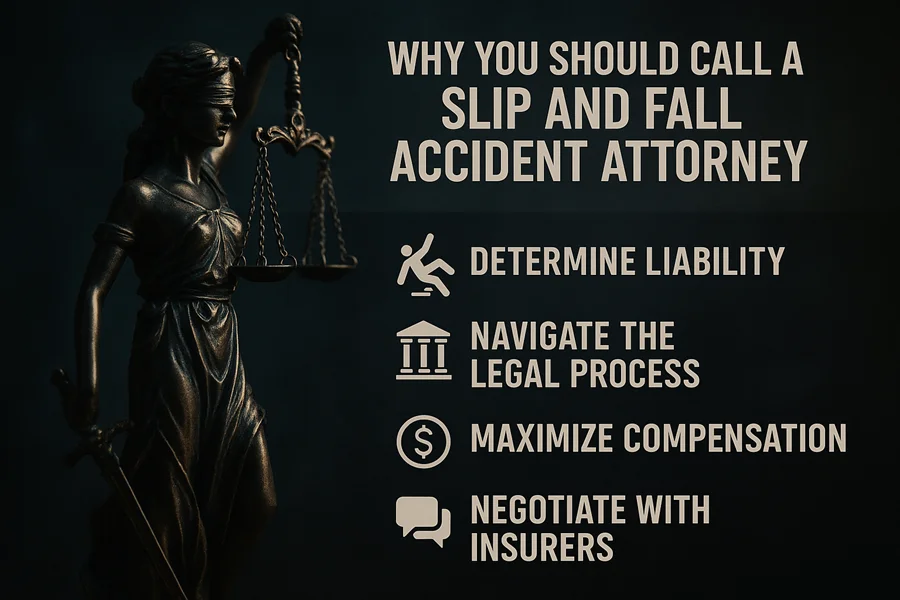
After a slip and fall accident, it is common to feel confused about what steps to take next. Medical bills, missed work, and pain can pile up quickly. A slip and fall accident attorney can guide you through the legal process so that your rights are protected.
With professional support, you do not have to face insurance companies or property owners on your own. This makes it easier to focus on your recovery while knowing that your case is being handled with care.
An attorney also helps you understand the true value of your claim. Many people think only about the immediate costs, but the impact of an accident often lasts much longer. Ongoing treatment, lost wages, and emotional distress should also be considered. By working with a legal professional, you give yourself the best chance at receiving fair compensation for everything you have gone through.
Immediately. Many businesses in Los Angeles only keep surveillance footage for 7 to 30 days before it’s deleted, which can be critical evidence in trip and fall cases. Acting quickly helps preserve proof, identify witnesses, and strengthen your claim.
Yes. Even small hazards such as cracked sidewalks or loose flooring can lead to valid trip and fall claims if the property owner failed to fix or warn about the danger. In California, liability depends on whether the condition was foreseeable and preventable.
Yes. California follows a comparative negligence rule, meaning you can still recover damages even if you were partly responsible for the fall. Your compensation is reduced based on your percentage of fault.
A valid claim requires proving that a dangerous condition existed, the property owner knew or should have known about it, and failed to fix or warn about it. You must also show the hazard directly caused your injuries.
Trip and fall settlements vary widely based on injury severity, medical costs, and liability. Cases can range from thousands to significant six- or seven-figure outcomes depending on long-term impact and evidence strength.
Slip And Fall Attorney Helping Victims Throughout California, Including Campbell, and Los Angeles
If you are filing a claim against a government entity, you are subject to shortened notice and filing deadlines. It is crucial that you do not miss these deadlines otherwise your claim may be forever barred.
To ensure that the proper grounds for your claim are met, you should contact the knowledgeable personal injury attorneys at Deldar Legal who have the resources and experience necessary to help you collect compensation for medical expenses, lost wages and pain and suffering.
Want to know the exact steps to take right after a fall? Read our comprehensive guide on what to do after a slip and fall accident in California, including how to document your injuries and protect your legal rights.
Contact us today for a complimentary consultation. We serve clients throughout California, including Sacramento, San Francisco, Los Angeles, West Covina, and Riverside.