

A collision with a commercial truck can bring painful injuries, medical appointments, missed work, vehicle damage, and questions about a rental car or insurance. People searching for federal law truck accident claims California are often trying to understand whether a trucking rule could matter in an injury case. The short answer is that federal safety requirements may guide an investigation, but the facts, the particular rule, and California law all matter. A single log entry or inspection form rarely explains an entire collision. The more useful question is what the evidence shows about the operation, the crash, and the connection between them.
Call Deldar Legal at (844) 335-3271 or request a free consultation.
How federal rules fit into a California truck claim
Federal motor-carrier safety requirements address subjects such as driver qualifications, hours of service, vehicle inspection, maintenance, and carrier operations. They apply according to the type of vehicle and operation, and not every requirement covers every truck or trip. California law may also govern whether someone failed to use reasonable care, whether that conduct caused an injury, and what losses may be considered in a civil claim. The Federal Motor Carrier Safety Administration (FMCSA) is the federal agency responsible for motor-carrier safety oversight; its public information offers context on these requirements. A specific regulation’s applicability still depends on the facts of the trip.
An alleged rule violation is not automatically a complete legal finding of fault. It may be evidence to evaluate alongside collision mechanics, witness accounts, medical records, and other circumstances. A missing form, disputed log entry, or expired inspection does not by itself show that the issue caused the crash. The investigation needs to connect evidence about conduct to the event and resulting harm. Conversely, a record that appears complete does not necessarily settle whether an operation was safe. The evidence must be tested in context, including its source, timing, and consistency with independent information.
More than one party may have relevant information or responsibility, depending on the circumstances. That could include a driver, motor carrier, maintenance contractor, cargo loader, or another business. A company name on the truck is a useful lead, but it does not answer every question about who controlled the vehicle, work schedule, maintenance, or safety decisions. Each proposed party must be evaluated on evidence about its role and conduct rather than assumption. Readers can review Deldar Legal’s semi-truck accident guide for broader information about these collisions.
Which records may help answer which questions?
Records can help reconstruct how a truck was operated before and during a collision. Their meaning depends on who created them, when they were created, what system produced them, and whether other evidence supports the same account. The table is a practical starting point, not a checklist that automatically proves fault. Some records may not exist, may be held by a vendor, or may need a formal process to obtain.
| Record or evidence | Question it may help answer | What else to examine |
|---|---|---|
| Electronic logging device (ELD) data | When was the driver recorded as driving, on duty, or resting? | Applicable rules, exceptions, edits, settings, and independent timestamps |
| Dispatch messages and trip schedule | What route, delivery timing, or instructions were communicated? | Who sent the communication and whether it affected the trip |
| Qualification and training records | What documentation did the carrier maintain about the driver? | The relevant duty and any connection between a record gap and the crash |
| Inspection and maintenance history | Were defects reported, repaired, or recurring? | The condition at the crash and whether it contributed |
| Vehicle event data or telematics | Could a system help explain speed, braking, or operation? | Retention, accuracy, calibration, and informed interpretation |
| Camera footage and scene evidence | What did vehicles, drivers, or roadway conditions appear to do? | Camera angle, clock accuracy, missing footage, and original files |
A careful review compares records instead of treating any single item as a stand-alone answer. A schedule may show a tight delivery window, for example, but it does not establish that a driver was pressured or fatigued. A maintenance entry may identify a defect, but investigators need to determine whether the defect existed at the relevant time and played a role in the collision. A witness may recall a truck moving quickly, but the account should be considered alongside roadway evidence, video, vehicle data, and the witness’s opportunity to observe.

How hours-of-service information should be assessed
Hours-of-service requirements regulate driving and duty periods in covered operations. Driver logs and ELD information may help establish when a driver was recorded as driving, working, or resting. Investigators may compare entries with dispatch communications, fuel and toll records, delivery timestamps, inspection entries, and witness accounts to build a more complete timeline. The starting point is to identify the driver, trip, and operation, then determine which requirements apply. Without that context, a log may be misread or an exception overlooked.
Suppose a log shows a rest period before a crash, while a delivery receipt and dispatch messages seem to indicate activity during that same period. That discrepancy deserves investigation. It does not by itself prove a false record or show that fatigue caused the collision. Investigators can check whether the records concern the same trip and time zone, how device clocks were set, whether corrections were made, and whether an applicable exception explains the entry. They can also ask who created each record and whether the source system retains an audit trail. The purpose is to reconcile sources, not to jump from a mismatch to a conclusion.
A log that appears internally consistent does not settle every question either. It may be compared with independent timestamps to see whether the schedule makes sense. Investigators may look for travel time between stops, fuel purchases, toll records, appointment times, and communications. A timestamp can reflect when information was entered rather than when an event occurred, so the method of recording matters. If several systems disagree, clock settings and time zones should be documented before drawing a timeline. A sound review notes unresolved differences rather than quietly treating an estimate as exact.
Fatigue is not always visible in a police report or photograph. Relevant circumstances may include the driver’s schedule before the trip, the length and timing of work, communications about delivery expectations, and reliable evidence of activity. A long shift alone does not establish what caused a crash. The evidence must support a connection between the driver’s condition or conduct and the collision. A driver may also have rested but encountered a sudden hazard; the details of the event still matter. This distinction keeps the analysis focused on proof rather than speculation.
What evidence should you preserve after a truck collision?
Put safety and medical care first. Call for emergency help when needed, follow your care team’s advice, and do not enter a roadway or approach a truck to collect information. When you are able, preserve materials already in your possession and note where other evidence may be available. You do not need to conduct an investigation from the scene. A simple, accurate record of what you saw and the documents you received can be useful later.
- Keep original photographs and videos. Save images of vehicles, roadway, traffic controls, debris, visible injuries, and surrounding conditions when it was safe to take them. Keep original files, dates, and metadata if possible. Do not edit the only copy; make a separate working copy if you need to add notes.
- Write down what you remember. Note approximate time, direction of travel, lane position, sequence of events, weather, and what you heard or saw. Mark uncertain details as estimates. A short note made soon after the event can preserve a recollection, but do not try to fill gaps by guessing.
- Record identifying details. If safely available, note the truck and trailer numbers, license plate, carrier name, and visible company markings. A photograph can reduce transcription errors. Do not step into traffic or approach a damaged vehicle to obtain details.
- Save witness information. Record names and contact details if people are willing to share them. Note what each person says they observed, not a conclusion about legal fault. Do not pressure or coach a witness.
- Organize medical and expense records. Keep visit summaries, follow-up instructions, prescriptions, receipts, wage information, and transportation or rental records. They can document a timeline and practical effects, but the records alone do not decide what may be recovered.
- Retain communications. Save messages, letters, and emails from insurers, the carrier, or other parties. Keep a record of calls and dates. Avoid deleting material related to the collision, even if a message seems routine.
- Ask about records held by others. Vehicle data, driver logs, camera footage, maintenance files, and dispatch communications may be held by a carrier or vendor. A prompt written preservation request may be appropriate. Do not assume that every system keeps information indefinitely.
Do not access a truck, company system, or another person’s account to obtain information. Keep your own evidence secure and allow an appropriate legal process to address records held by others. Deldar Legal’s truck accident injury resource provides related information about claims after a collision.
Why records can disappear or become harder to interpret
Some evidence is time-sensitive. A vehicle may be repaired or moved, a business camera may record over older footage, and electronic systems may retain information for different periods. A carrier’s records may sit in separate platforms or be held by a third-party technology vendor. The exact retention practice varies, so an injured person should not assume a particular file will remain available. Vehicles and equipment may also be sold, stored, or altered for ordinary operational reasons, which can make later examination more difficult.
A written preservation request can identify categories of material and the collision date, time, vehicles, and people involved. It can ask that relevant records not be deleted or changed while the claim is investigated. Such a request is not the same as receiving the records, and it cannot create information that was never recorded. Counsel can help identify potentially relevant material and determine what process may be needed to seek it. A request should be specific enough to guide a search without assuming that every listed item exists or is controlled by one company.
Physical evidence changes too. A truck can be repaired, a passenger vehicle can be salvaged, and roadway conditions can shift. When an inspection is appropriate, parties may need to coordinate access and document the vehicle’s condition before repairs. Safety, ownership, storage arrangements, and the legal process should guide any inspection; do not try to examine or move a vehicle yourself. If a vehicle is scheduled for repair or disposal, it can be helpful to identify who controls it and when material changes may occur.
For your own digital materials, keep a safe backup of original photographs and messages. Avoid cropping, adding captions to the original file, or forwarding an image in a way that strips useful information if you can preserve the original separately. Make a brief note of when and where each photograph was taken and who took it. If another person sent you an image, retain the original message that identifies the sender and date. These habits make it easier to explain the source and context without altering the evidence.
How investigators evaluate conflicting accounts
People may remember a fast-moving collision differently. A driver’s account, a witness’s estimate of speed, and an electronic record can each have limitations. A reliable investigation tests explanations against independent evidence instead of selecting the statement that first seems most favorable. The review should identify both what is known and what remains uncertain. A contradiction may matter, or it may result from different vantage points, clock settings, or the way a record was made.
- Build a timestamped sequence. Compare available log entries, dispatch messages, emergency-call times, toll or fuel records, delivery information, and video. Record the time zone and clock source for each item.
- Check how a record was made. Identify its creator, creation date, later edits, and method of export or preservation.
- Compare accounts with the scene. Review vehicle damage, roadway layout, traffic controls, visibility, road grade, debris, and available measurements or photographs.
- Separate observation from inference. A witness may clearly recall hearing braking but may not be able to estimate exact speed. Preserve what was observed without overstating certainty.
- Use technical analysis when needed. Vehicle data or crash reconstruction may require qualified analysis. Any expert conclusion should explain the underlying information and its limits.
For example, imagine a driver record that appears to show a rest period, while delivery timestamps raise a question about whether the timeline is complete. Investigators would first verify that the records refer to the same trip and time zone, then check how the ELD information was recorded and whether messages or receipts add context. They might compare the claimed route and elapsed time with independent sources. If the discrepancy remains, they can identify what is established and what cannot yet be confirmed. Only then can they assess whether the difference bears on driving conduct or the collision. This method avoids turning an inconsistency into a premature legal conclusion.
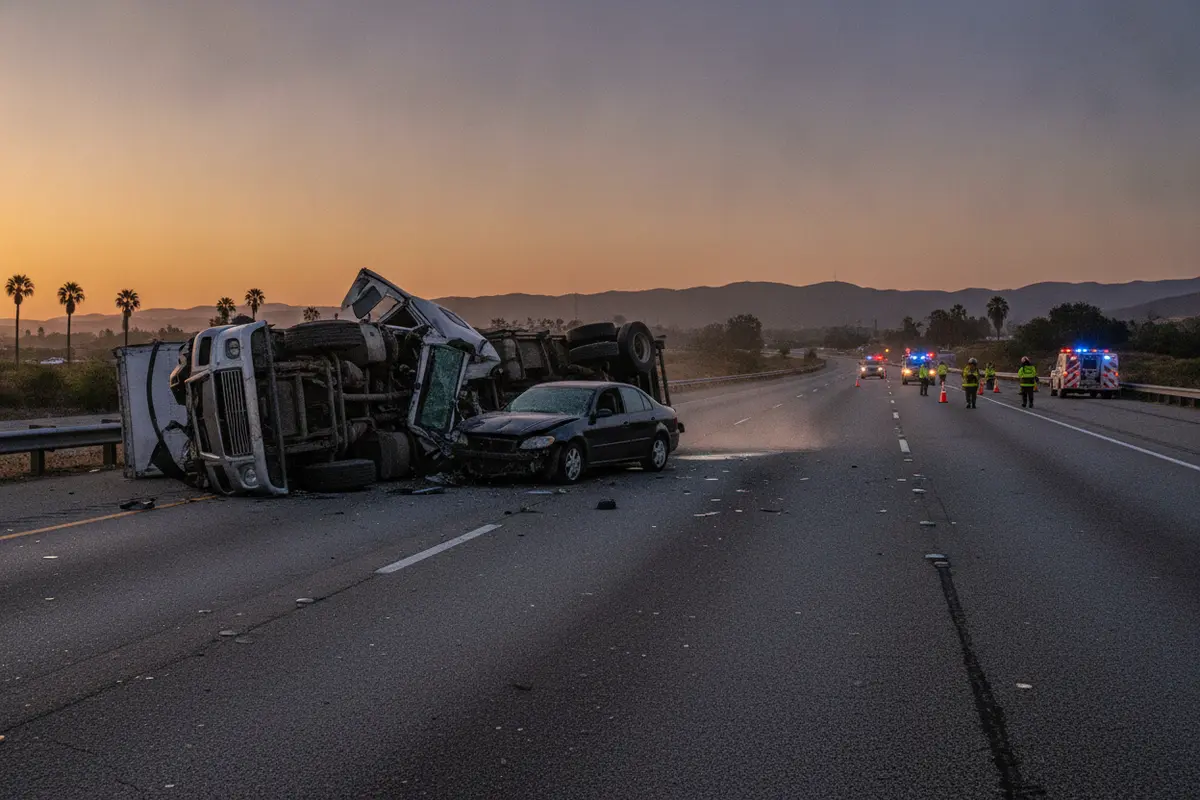
How federal requirements and California injury law work together
Federal motor-carrier rules may provide relevant safety requirements for covered operations. A California injury claim still requires analysis of applicable civil law and evidence. Questions may include what duty applied, whether conduct fell short of that duty, whether the conduct contributed to the collision, and what legally recognized harm followed. The particular facts determine how a federal requirement fits. A regulation may inform an investigation without creating an automatic answer about liability.
Different rules can apply to different operations, and exceptions or definitions matter. Investigators may need to identify the vehicle’s use, the carrier’s operation, the trip, and who controlled a decision before deciding which requirements are relevant. Do not assume that a federal rule applies simply because a vehicle was large or displayed commercial markings. The type of service and circumstances can affect the analysis, and a lawyer should check the actual rule rather than rely on a general description.
More than one person or company may have contributed to a collision. A driver’s actions, a carrier’s scheduling or supervision, maintenance work, cargo loading, roadway conditions, or another driver’s conduct could be examined if evidence supports it. The presence of a contractor or company in the story does not automatically make that party responsible. Evidence must connect the conduct under review to the event and injury. A useful investigation considers alternative explanations as well as evidence that supports a claim.
California comparative-fault principles may be relevant when evidence suggests that more than one person contributed. A regulatory issue on one side does not resolve all questions about other people’s actions. Investigators may examine lane position, visibility, stopping distance, speed, road conditions, and the sequence of events. Deldar Legal’s California personal injury information and car accident legal guidance offer broader context about collision claims.
Deadlines and procedural requirements can depend on who may be involved. A claim involving a public entity can have different notice rules from a claim against a private company. This article cannot calculate a deadline for an individual case. Promptly ask a qualified California attorney to review the parties, dates, and circumstances. Keep letters and notices you receive, and note when they arrived, so they can be considered during that review.
What to do while a claim is being evaluated
Continue to focus on your health and keep a straightforward record of treatment. Tell medical providers about your symptoms, follow their recommendations, and report changes. Do not downplay pain because it was not obvious at the scene. Save appointment details and records so you can give an accurate timeline. If a symptom affects ordinary activities, make a factual note of what changed and when; avoid exaggeration or speculation about the cause.
Be thoughtful about recorded statements and broad document releases. Before responding, ask who is requesting information, what it will be used for, and whether a release seeks records beyond the collision or injury at issue. Keep communications factual. If you do not know an answer, say so rather than guessing about speed, fault, or how recovery will progress. Keep copies of anything you sign or send, and note the date and recipient.
Track practical costs as they arise. Keep receipts for transportation, medication, and other out-of-pocket expenses, and make a note of time missed from work. Whether a particular loss can be included depends on the facts and applicable law. Good documentation makes a timeline easier to review but does not itself establish entitlement to payment. Separate expenses connected to the collision from ordinary costs, and keep brief notes explaining why an unusual expense occurred.
For a case discussion, prepare any crash report or incident number, the truck’s identifying details, photographs, claim correspondence, and a list of medical providers. A short timeline is useful; mark what you know directly and what you are estimating. You do not need every document before asking for guidance. The firm’s auto accident practice page and firm overview offer additional information about its California injury practice.
Questions to raise in an initial case review
A focused conversation can help identify evidence gaps and practical next steps. Consider asking which companies or agencies may hold driver, vehicle, or roadway records; what evidence could be lost or changed soon; and how it may be preserved through an appropriate process. You can ask whether the truck’s operation appears to fall within federal motor-carrier requirements and what facts are needed to decide that. These are questions for a case-specific review, not conclusions that can be drawn from the vehicle’s appearance alone.
You may also ask how an investigation will compare ELD data with dispatch messages, timestamps, and physical evidence; whether a maintenance provider, carrier, cargo business, or public entity needs to be considered; and whether special notice or filing deadlines may be relevant. Ask what documents could help evaluate medical care, missed work, and other effects. It can be useful to understand who will contact you, how to share additional materials, and what information is still needed. You do not need to know technical terminology to ask for a plain-language explanation.
An attorney can assess which questions are material after reviewing available facts. Not every record will exist or be accessible, and not every inconsistency will change the legal analysis. The aim is to preserve useful evidence, test it carefully, and avoid conclusions that go beyond what the evidence supports. A thorough evaluation should address evidence gaps and unfavorable facts as well as helpful information. It should also distinguish the investigation’s next steps from an assurance about what a claim will achieve.
Deldar Legal represents injured people in California and reports a recovery track record of $250 million+. Past results do not predict an outcome in another matter; every case depends on its own facts and applicable law. The firm describes its work through Integrity, Excellence, Justice, Respect, and Compassion. Readers can review its California locations and consultation information to consider an initial discussion.
Call Deldar Legal at (844) 335-3271 or request a free consultation.
Frequently asked questions
Does a federal trucking-rule violation automatically prove a carrier caused a crash?
No. A possible violation may be relevant evidence, but it does not automatically establish civil responsibility or causation. The specific rule, whether it applied, the surrounding evidence, and California law need to be evaluated together.
Can hours-of-service records help explain a truck collision?
They may help establish recorded driving and duty periods. Investigators can compare them with dispatch messages, delivery records, and other timestamps while checking for applicable exceptions, technical issues, and context.
Who may be responsible after a commercial truck collision?
Depending on the evidence, a driver, motor carrier, maintenance provider, cargo-related business, or another party may warrant investigation. A claim needs evidence connecting a party’s conduct to the collision and resulting harm.
How soon should evidence be preserved?
As soon as practical, after safety and medical needs are addressed. Some video or electronic information may not remain available indefinitely, and vehicles may be moved or repaired. A lawyer can advise about an appropriate preservation request.
Does this article tell me the deadline for my California claim?
No. Deadlines depend on the parties and circumstances, and special procedures may apply when a public entity is involved. Ask a qualified attorney to review the relevant dates promptly instead of relying on a general article.
Author
Deldar | Injury & Trial Law Firm represents injured people in California. This article provides general information, not legal advice about a specific matter. Its authoring team aims to explain complex injury-claim issues in clear, practical language. Each case depends on its facts and applicable law.