

A serious truck collision can bring pain, medical appointments, lost work, and hard questions about responsibility. California truck accident liability may involve more than the driver: the carrier, vehicle owner, repair provider, cargo handler, or another road user may also warrant investigation. The facts and records matter; a company name on a truck or a person’s presence at the scene does not settle the question.
Call Deldar Legal at (844) 335-3271 or request a free consultation.
Why can truck accident responsibility involve several parties?
A commercial trip is often a chain of separate roles. One business may employ or contract with the driver, another may own the tractor, and a third may own the trailer. A maintenance vendor might service the brakes; a warehouse crew might load the freight; a broker may arrange transportation. Some roles overlap, but each can have different duties and records.
That complexity matters when a collision has several possible causes. For example, a driver may have made an unsafe lane change, while a pre-existing tire problem affected control. Alternatively, a sudden cargo shift may have contributed to a rollover, or another vehicle may have forced an emergency maneuver. These are investigative possibilities, not conclusions. Evidence must connect a party’s conduct or legal responsibility to the incident and resulting harm.
A useful first step is to separate three questions: Who was involved? Who had control of the relevant decision or equipment? What evidence links that decision or condition to the crash? A company listed on a shipping paper may be relevant, but the paper alone does not prove fault. Likewise, vehicle ownership does not answer who inspected, maintained, or operated the vehicle at the critical time.
Which parties may be involved in a California truck crash claim?
Driver
A driver’s conduct may be examined where evidence points to speeding for conditions, distraction, following too closely, a failure to yield, an unsafe turn or lane change, or fatigue. A citation, witness statement, or initial account can be useful, but it may not tell the entire story. Scene measurements, vehicle data, video, and the sequence of events may confirm or complicate an early explanation.
Context matters. Investigators may ask what the driver could see, how much time was available to react, whether the road was wet or under construction, and whether another road user created a hazard. A fair analysis considers competing explanations rather than treating the size of the truck as proof of fault.
Motor carrier or trucking company
A carrier’s role may relate to hiring, training, supervision, trip assignments, safety procedures, or maintenance oversight. The questions depend on the driver’s relationship with the company and what the company did or controlled. Dispatch communications, work assignments, driver reports, and inspection records can help establish the practical arrangement.
The presence of a company logo does not automatically establish that the company is responsible for every act of a driver. A review may need to determine whether the driver was working for the carrier, what the assignment involved, and whether a separate company decision or omission contributed to the event. Contracts and operating records may clarify those matters.
Truck or trailer owner
The carrier may not own the tractor or trailer. A vehicle may be leased, rented, or operated under another arrangement. Investigators may need to identify the owner of each unit, who had the right to control it, and who arranged inspections and repairs. A tractor and trailer may have separate histories even when they were traveling together.
Photographs of plates, unit numbers, company markings, and visible damage can help identify the equipment. Save any paperwork that names an owner or lessor, but do not assume ownership alone resolves responsibility. The specific control, maintenance duties, and causal facts matter.
Maintenance and repair providers
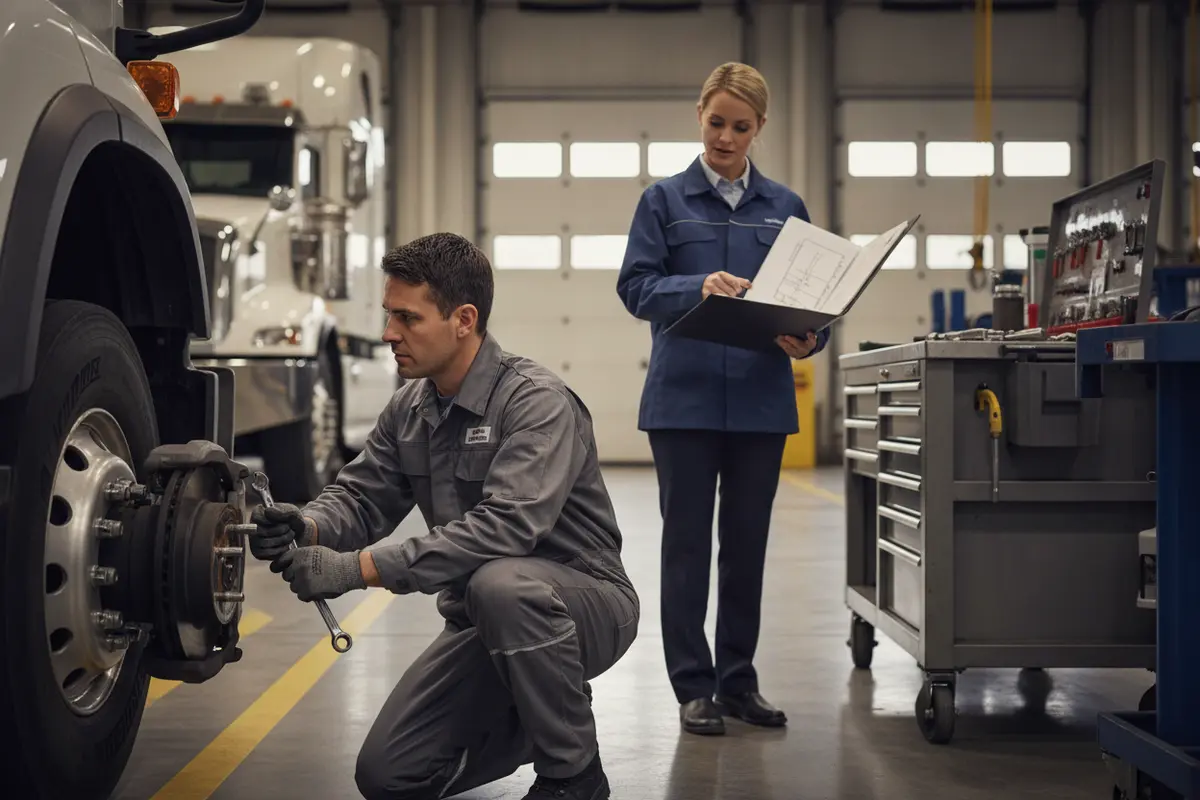
A service provider may be relevant if a specific inspection or repair failure contributed to a mechanical problem. Potential areas to examine can include brakes, tires, steering, lights, or a reported defect that remained unresolved. A component failure by itself does not establish that a repair vendor caused it. The scope and timing of the work, the condition of the part, and what the provider knew are important.
Repair orders, inspection sheets, invoices, parts records, and messages may help reconstruct the service history. A damaged part may be removed or the vehicle returned to service, so relevant evidence should be documented and preserved through appropriate lawful steps. Do not try to inspect or remove equipment yourself.
Shippers, loaders, brokers, and logistics companies
Cargo can affect stability, braking, and steering. Relevant issues may include weight, distribution, securement, or whether the cargo was appropriate for the vehicle. The work may have been done by a shipper, warehouse, loading contractor, carrier, or another company. Bills of lading, loading instructions, weight records, and photographs can help identify who performed which task.
A freight broker may arrange transportation without physically loading the truck. Its precise role should be established from contracts and communications rather than assumed. The inquiry may include who selected the carrier, what information was shared, who controlled the loading decision, and whether the relevant conduct contributed to the crash.
Other motorists, public entities, or product makers
Another road user may have contributed to the sequence by changing lanes abruptly, stopping, or creating a hazard. Road design, temporary construction conditions, or a vehicle component may also warrant investigation in some cases. These possibilities require evidence. A collision at a particular location does not, by itself, establish a road defect, and a failed component does not automatically establish a product defect.
If a public entity may be involved, special claim procedures and deadlines can apply. If a product issue is suspected, technical examination and the part’s history may matter. Identify the possibility early and seek advice about the right process rather than waiting for every detail to become obvious.
How can you organize an investigation without guessing?
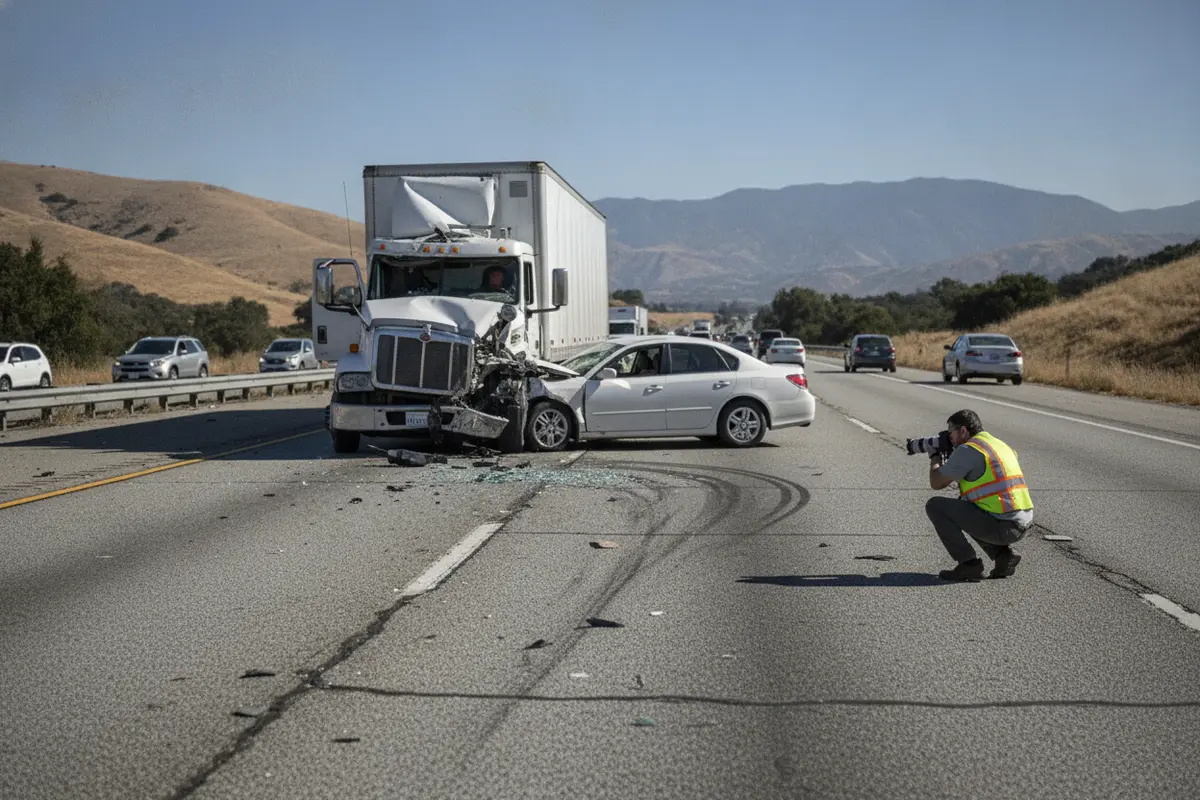
Think of the investigation as a timeline, not a list of accusations. Start with what happened before impact, identify the decisions and conditions that may have shaped the sequence, then connect each issue to a record or witness. A simple chart can keep facts separate from assumptions.
| Question | Example evidence | What it may help clarify |
|---|---|---|
| Which vehicles were involved? | Plates, unit numbers, photographs, incident report | Tractor and trailer identity, owner, carrier |
| What happened immediately before impact? | Witness accounts, video, scene marks, vehicle data | Movement, timing, visibility, possible evasive action |
| Was equipment condition relevant? | Inspection reports, repair orders, defect notices | Known problems, inspection and service history |
| Who handled the freight? | Shipping documents, weight records, loading instructions | Roles in loading, weight, or cargo securement |
| What harm followed? | Medical records, work notes, receipts, symptom log | Treatment, restrictions, expenses, daily impact |
As an example, suppose a truck veered while entering a curve and the trailer appeared to shift. A photograph of cargo straps may be relevant, but it cannot establish how the load was placed or who secured it. Investigators may need shipment documents, loading records, the driver’s account, and expert examination of the vehicle and cargo. If the records instead show a sudden evasive maneuver after another vehicle entered the lane, that may change the questions. The goal is to test possibilities against evidence.
A second example involves a truck that could not stop in time. The scene may show braking marks, but those marks alone may not reveal whether the cause was speed, road conditions, a mechanical issue, following distance, or a combination. Maintenance history, the route, traffic conditions, witness observations, and available vehicle information can help distinguish those explanations.
What evidence may help identify responsible parties?
Different organizations may hold different records. Some can be collected at the scene, while others may require a formal request. Make a list of what exists, who may have it, and what question it could answer.
- Scene evidence: photographs and video of vehicle positions, road conditions, visible damage, debris, traffic controls, and nearby cameras.
- Witness information: names and contact details for people who saw the crash or events leading up to it.
- Vehicle identifiers: plates, tractor and trailer numbers, company names, and available ownership information.
- Trip records: dispatch instructions, route details, delivery documents, and work assignment information.
- Vehicle condition records: inspections, reported defects, service orders, repair invoices, and available electronic data.
- Cargo records: bills of lading, loading instructions, weight tickets, and securement documentation.
- Injury documentation: treatment records, clinician instructions, work restrictions, receipts, and a dated symptom journal.
Some video, electronic data, or business records may be routinely overwritten or otherwise lost. A party may need to take proper steps to request preservation. Keep copies of documents and messages you already have, note the names of businesses involved, and ask a lawyer about lawful preservation requests. Do not enter a damaged truck, interfere with an inspection, or remove a component.
When writing your own account, distinguish what you saw from what someone later told you. Record approximate times and locations, but mark them as estimates if you did not check a clock or measure distance. Keep original photographs where possible. Do not edit an image in a way that removes context; make a separate copy if you need to annotate it for your own notes.
What should you do after a truck collision?
- Get medical care. Call emergency services when appropriate and follow medical advice. Tell clinicians about symptoms and how they affect daily tasks. Your health comes before collecting evidence.
- Move to safety. If possible, get away from moving traffic. Do not take photographs or retrieve belongings if doing so would put you in danger.
- Report the collision. Give responding authorities accurate information and keep any report or incident number. Avoid speculating about speed or cause when you do not know.
- Document safely. If it is safe, photograph the vehicles, plates, truck identifiers, road conditions, and visible damage. Ask witnesses for contact information without pressuring them to take sides.
- Keep records. Save medical paperwork, receipts, work communications, towing information, and insurer correspondence. A dated log can help record symptoms, appointments, missed work, and changes in routine.
- Be deliberate with insurer requests. You can provide basic facts, but do not guess in a recorded statement. Before signing a broad release or accepting a settlement, understand what information or rights it covers and consider legal advice.
- Ask about preservation and deadlines promptly. Claim procedures depend on the parties and legal issues. A potential public-entity claim can involve different steps from a claim against a private business.
For more on steps after a commercial vehicle collision, see Deldar Legal’s guide to truck accident injuries and what to do next and its overview of semi-truck accidents.
How can California fault rules affect the analysis?
California uses comparative fault principles: more than one person’s conduct may be considered when assigning responsibility for an injury. The California Supreme Court described the state’s comparative negligence approach in Li v. Yellow Cab Co. The decision is available through the published opinion. This general rule does not decide who is responsible in a particular truck case. The evidence, applicable legal theories, and circumstances determine how the issue is evaluated.
For instance, a claimant may be alleged to have changed lanes shortly before a truck made contact. That allegation should be assessed alongside the truck’s position, available sightlines, timing, road markings, and witness or video evidence. A percentage cannot responsibly be inferred from a short description. Nor does a party’s early statement settle the matter.
Liability and injury documentation are related but distinct. Records of treatment, work restrictions, and daily limitations help explain the harm; they do not by themselves identify who caused the collision. Conversely, evidence about the crash does not fully describe the effect of an injury. Both parts of the record may be needed for a complete evaluation.
How do possible parties and evidence differ?
| Potential party | Issue to examine | Records that may be relevant |
|---|---|---|
| Driver | Attention, speed, fatigue, response to a hazard | Witness accounts, scene evidence, trip timeline, available vehicle data |
| Carrier | Assignment, supervision, safety process, maintenance oversight | Dispatch messages, policies, inspection reports, work relationship |
| Owner or lessor | Control of equipment and responsibility for condition | Ownership or lease records, service history, inspection records |
| Repair provider | Scope and quality of inspection or repair | Work orders, invoices, parts records, communications |
| Shipper or loader | Weight, distribution, cargo handling or securement | Loading instructions, bills of lading, weight tickets, photographs |
| Other party | Another vehicle, road condition, or component performance | Video, public records, technical inspection, witness accounts |
This is a checklist, not a finding of fault. One record may be incomplete or support more than one explanation. The practical task is to establish who made or controlled a relevant decision, when it happened, and whether it contributed to the collision or injury.
What practical and legal issues should you track?
Deadlines and notice rules vary with the claim, the parties, and the claimant’s circumstances. A claim involving a public entity may have an administrative notice step before a lawsuit can be filed. Do not calculate a deadline from a general article or assume that all claims follow the same schedule. Ask a lawyer to identify the rules that may apply to the specific facts.
Evidence has practical timelines too. A vehicle may be repaired or returned to service, a business may change systems, and a witness may become difficult to reach. Promptly note the date and location of the collision, the identities visible on vehicles and documents, and where relevant video or records may be held. If a public road, construction zone, or agency vehicle is part of the incident, record those details without assuming they establish fault.
Keep a basic claim file organized by date. One folder can hold medical records and instructions; another can hold expense receipts and wage documents; a third can contain photographs and insurer correspondence. A short chronology can include appointments, symptoms, communications, and work changes. This organization makes gaps easier to spot and reduces reliance on memory during a later conversation.
For broader information about injury treatment and expenses, see Deldar Legal’s treatment and expenses FAQs. Its pages on California auto accident matters and personal injury practice areas offer additional context. To learn about the firm’s statewide presence, visit its California locations page.
What questions can help you evaluate a truck crash?
- Which tractor and trailer were involved, and who owned, leased, and operated them?
- Who assigned the driver, planned the route, or controlled the delivery schedule?
- Were there prior reports, inspections, repairs, or warnings involving the truck?
- Who loaded the freight, recorded its weight, and decided how it was secured?
- What records may be held by the carrier, owner, shipper, repair provider, or another business?
- Did another vehicle, a road condition, or a component issue contribute to the sequence?
- What medical care, work limitations, and day-to-day effects have been documented?
- Could a public entity or special notice procedure be involved?
You do not need to answer every question before asking for help. Share what you know, identify what is uncertain, and bring documents or photographs you already have. A focused review can identify which records may be missing and what questions deserve follow-up.
Frequently Asked Questions
Can more than one party be liable in a California truck crash?
Yes. Depending on the evidence and applicable law, responsibility may involve a driver, carrier, owner, repair provider, cargo handler, or another party. Each role must be assessed based on its connection to the collision and harm.
Is the trucking company automatically responsible for the driver’s actions?
No. The driver’s relationship with the company, the work being done, and the relevant facts matter. Dispatch, contract, and assignment records may help clarify that relationship.
What if a driver or insurer says I caused the collision?
Stay factual and avoid arguing or guessing. Seek medical care, preserve what you can safely document, and keep relevant records. An initial statement is not a substitute for reviewing the available evidence.
How soon should truck records be preserved?
As promptly as reasonably possible. Some recordings or electronic information may be overwritten, and vehicles may be repaired or moved. A lawyer can advise on appropriate preservation requests for the parties and records involved.
Do I need to identify every potentially responsible party before seeking advice?
No. Start with the information you have, such as the date, location, truck markings, report number, and insurer details. Further investigation may identify additional parties or records.
Call Deldar Legal at (844) 335-3271 or request a free consultation to discuss your questions.
Discuss your situation and the next steps
Deldar Legal is a California personal injury firm with a reported $250 million+ recovery track record. Past results do not predict or assure a similar result; every matter depends on its facts and applicable law. If a truck collision has affected your health, work, or family routine, timely guidance may help you understand potential parties, protect relevant evidence, and consider possible next steps.
Author
Deldar Legal | Injury & Trial Law Firm represents injured people in California personal injury matters, including motor vehicle collisions and serious injury cases. This article provides general information, not legal advice for a particular situation. Consult a lawyer about the facts and deadlines that may apply to your matter.