

A train collision can leave you dealing with painful injuries, confusing insurance calls, and urgent questions about who was responsible. A Sacramento train accident lawyer can help identify the parties and evidence involved, but the right next steps depend on where and how the crash happened. Preserve what you can and get medical care first.
Call Deldar Legal to discuss what happened or request a case review about a train injury.
Why can a Sacramento train accident claim involve more than one party?
A train crash may look like a simple collision, but responsibility can turn on decisions made by several organizations. The train operator may differ from the company that owns or maintains the track. A public agency may own a road or crossing. A contractor may have performed inspection, signal work, or construction. In some cases, a driver, vehicle manufacturer, train manufacturer, or another party may also be part of the investigation.
These possibilities do not mean every named party is legally responsible. A claim needs evidence connecting a party’s conduct to the injury under the applicable law. That is why it is important to determine who controlled the train, track, crossing equipment, warning systems, and maintenance work at the time of the event. Start with the location and date, then identify which entities had duties relating to the specific hazard.
For example, a passenger injured during an abrupt stop raises different questions from a driver struck at a crossing. A passenger event may require looking at train operation, passenger conditions, and the cause of the stop. A crossing collision may involve sightlines, warning devices, track conditions, road design, or the conduct of the people involved. A derailment can require a broader examination of equipment, inspection, operating records, and track maintenance.
See Deldar Legal’s overview of train and Metrolink accident matters for a related explanation of the firm’s practice. For nearby services and regional information, see the firm’s Sacramento location page. A listed location does not by itself establish where a particular claim must be filed or which court has authority.
What kinds of Sacramento-area train incidents may lead to an injury claim?
Rail-related injuries can occur in several settings. The details shape what evidence to seek and which legal rules might apply.
- Passenger injuries: A rider may be injured in a collision, derailment, sudden stop, onboard fall, or event involving an unsafe station or platform condition.
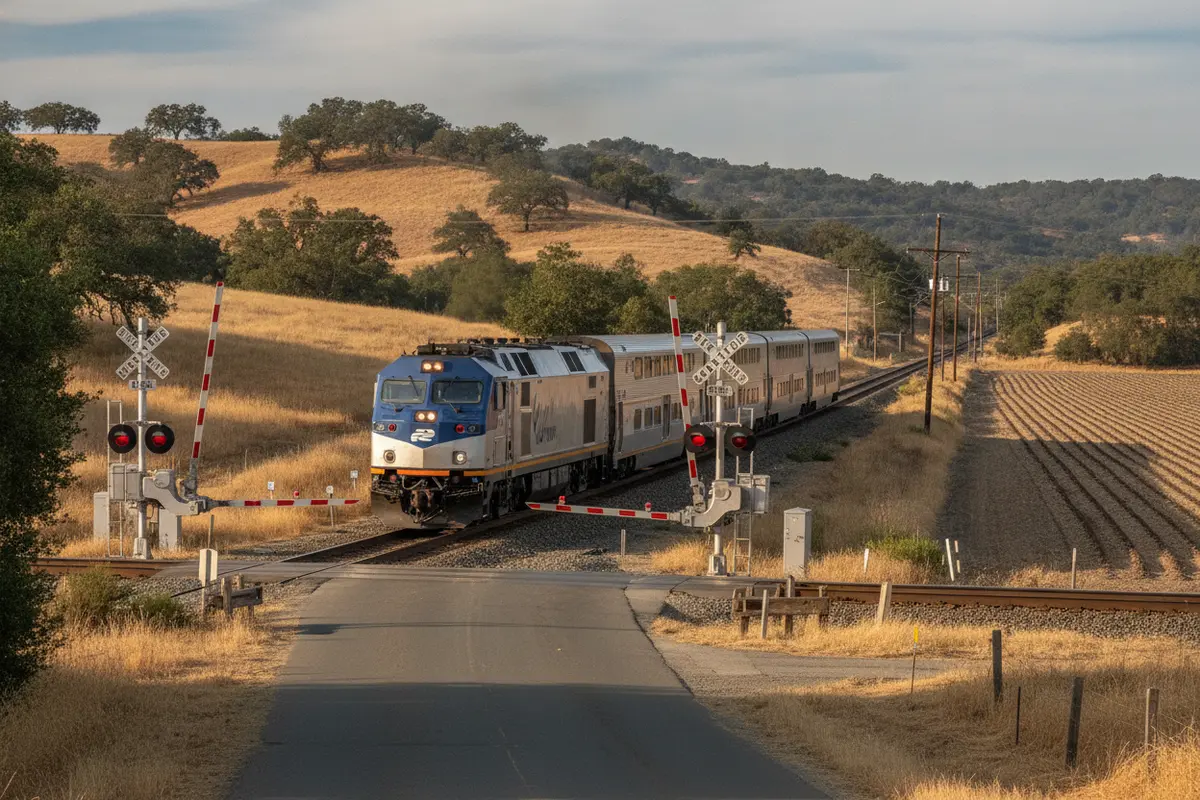
- Crossing collisions: A train may collide with a car, truck, bicycle, or pedestrian at a road-rail intersection. Relevant questions can include whether signals and gates operated, whether sightlines were obstructed, and how the crossing was designed and maintained.
- Rail-yard or worksite incidents: Workers and contractors may face hazards involving moving rail equipment, machinery, or work zones. The worker’s role and employment relationship can affect which legal framework applies.
- Trackside incidents: A person may be hurt near a station, platform, or other rail property. The location and circumstances matter when evaluating duties and possible responsibility.
- Freight or hazardous-material events: A derailment or release can cause direct physical injury and may also create difficult questions about exposure, evacuation, and medical documentation.
Do not assume that a particular type of incident automatically creates a claim. The cause, available proof, injury, and applicable law all matter. It can be useful to write down what you know while details are fresh, but avoid guessing about fault or filling gaps in memory.
Who may be responsible for a train or crossing injury?
The possible defendants depend on the facts. A careful investigation may consider the rail carrier or passenger-service operator; a track owner; a company responsible for inspection or maintenance; a contractor that worked on signals, rails, or nearby construction; a manufacturer or repair company if equipment failed; and a city, county, state, or other public entity connected to a road, crossing, or property condition. A person involved in a collision may also be relevant.
Ownership and control are not always the same. One entity may own a rail line while another operates trains over it. A public agency may control the road approach, while a railroad or contractor has separate responsibilities around rail equipment. Records, contracts, operating arrangements, and maintenance history can help clarify those roles. The investigation should not treat an organization’s name on a sign or train as the complete answer.
Public-entity involvement requires particular care. A claim against a California public entity can involve administrative claim-presentation rules and short deadlines, with timing and exceptions depending on the claim and claimant. Do not assume the ordinary personal-injury filing period is the only deadline. A lawyer should identify each potentially responsible public entity and review the applicable rules promptly.
Federal law can also matter in rail cases. Federal safety regulations, federal statutes, and federal-court jurisdiction are distinct questions; the fact that a train or railroad operates across state lines does not automatically settle every one of them. A railroad employee’s claim may involve a different federal framework from a passenger’s injury claim. The applicable law depends on the person’s role, the parties, and the facts. This is one reason general online information cannot replace a claim-specific review.
Where can a Sacramento train accident claim be handled?
The place where an injury happened can be relevant to which court has a connection to the dispute, but the location alone does not answer every jurisdiction question. The parties, legal claims, amount and type of relief sought, and any federal statute may affect whether a case belongs in state court, federal court, or another forum. A claim may also involve an administrative process before a lawsuit can be filed, especially when a public entity is involved.
Venue is a separate question from jurisdiction. Venue generally concerns the appropriate geographic place for a case within a court system; jurisdiction concerns the court’s legal authority to hear it. A Sacramento-area injury does not automatically mean every potentially responsible party must be sued in Sacramento, and a railroad’s presence in multiple states does not by itself establish federal jurisdiction. These issues should be reviewed against the parties and claims actually involved.
If more than one defendant may share responsibility, each may raise different defenses or procedural issues. A claim against a private rail operator can follow a different path from a claim involving a local public agency or a rail employee’s workplace injury. Multiple claims may sometimes proceed together, but that depends on the governing rules. Keep every notice, denial, and request for information, and get advice before assuming that one filing or court process covers every party.
Deldar Legal describes its work as California-wide. You can review the firm’s Sacramento service-area information, but the page is not a determination of where a claim should be filed. A lawyer reviewing the facts can distinguish the location of the accident, the proper parties, applicable filing procedures, and the appropriate forum.
What evidence should be preserved after a train accident?
Important proof can disappear quickly. Video may be overwritten, equipment repaired, and physical conditions changed. Rail operating records and other materials may be held by different organizations. If you are injured, do not put yourself at risk to gather evidence; take care of your health and ask someone else to help when possible.
- Get medical attention and keep the records. Tell the provider about each symptom, even if it seems minor at first. Keep discharge papers, prescriptions, referrals, bills, and notes about how the injury affects daily activities. Follow medical instructions and report changes in your condition.
- Record your own account. As soon as you are able, write down the date, approximate time, location, direction of travel, where you were, what you observed, and what happened immediately before and after the event. Separate what you personally saw from what another person told you.
- Photograph the scene if safe. Images may show the crossing layout, warning lights, gate position, road surface, lighting, sightlines, damage, and visible injuries. Include wide views and closer details. Do not trespass on rail property or approach active tracks to take pictures.
- Identify witnesses. Ask for names and contact information when practical. A witness’s own words and recollection may matter later. Avoid coaching anyone or asking them to adopt your version of events.
- Keep travel and incident documents. Save tickets, receipts, trip notifications, incident numbers, messages, and any correspondence from an operator, insurer, or public agency. Note who contacted you and when.
- Preserve damaged property. Keep damaged clothing, a helmet, a child seat, or other relevant items if doing so is safe and practical. Photograph the item and its condition. Do not repair or discard it before documenting it and considering whether it may be important evidence.
- Keep a simple impact log. Record appointments, missed work, assistance needed at home, and activities that became difficult. This can help you recall the course of recovery; it is not a substitute for medical records or wage documentation.
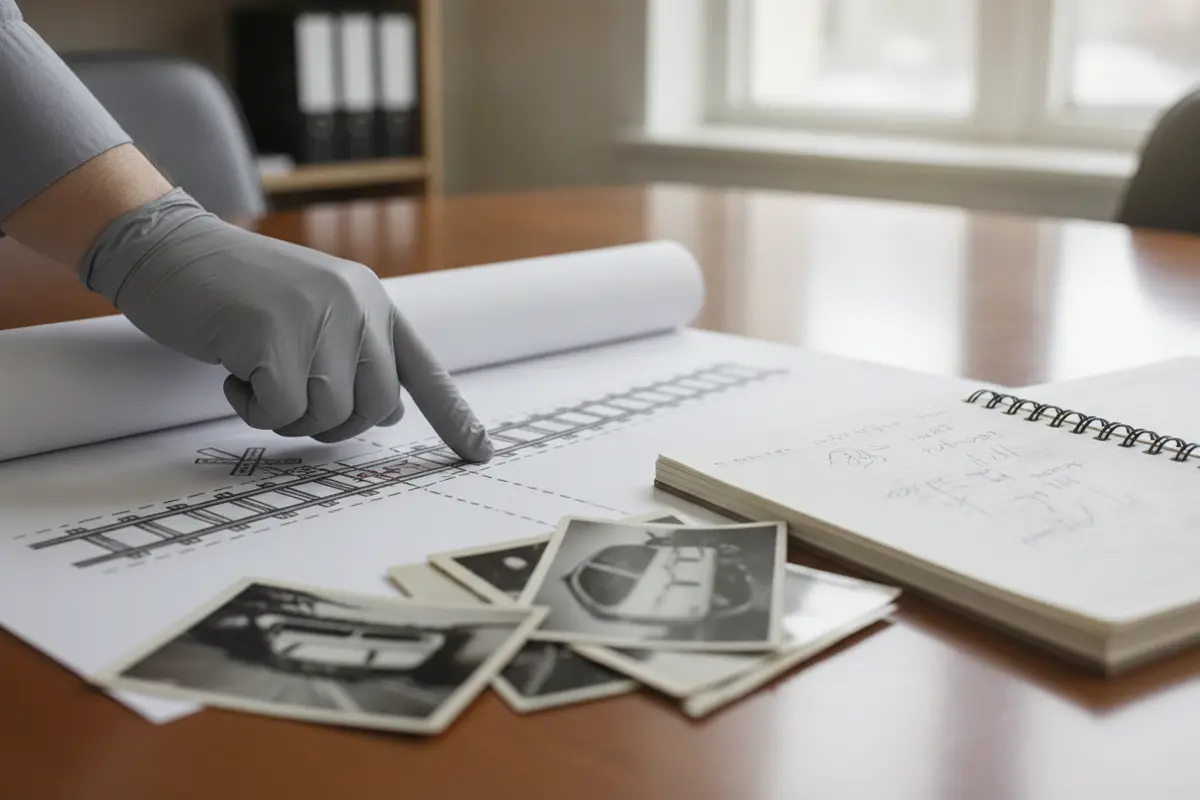
Formal evidence may include train event data, dispatch and communications records, inspection and repair logs, signal timing or maintenance records, surveillance footage, photographs, incident reports, and contracts assigning work or control. Which items exist depends on the event. A prompt preservation request may be appropriate, but it does not ensure that every record exists or that a recipient will agree with your position.
When a lawyer investigates a crossing event, useful questions can include whether the signal system was inspected on schedule, whether a reported fault was addressed, whether the gate and lights were functioning at the time, and what the sightline was from the road. For a passenger incident, the inquiry may instead focus on the train’s movement, the condition of the car or platform, available video, and the operator’s incident response. Those are investigative questions, not conclusions that a defect or violation occurred.
In some situations, counsel may ask a rail company, public agency, contractor, or insurer to retain relevant materials. A preservation request can identify records, video, physical equipment, and electronically stored information that may be relevant. It is not a substitute for formal discovery or an order from a court, and it may not capture records held by an entity that has not yet been identified. This is one reason early work to map the organizations involved can matter.
Keep copies of anything you send and note when it was sent and to whom. If an entity contacts you to inspect damaged property or requests access to medical or employment information, do not destroy evidence, but also do not assume you must sign a broad release. Ask what the request covers and get advice if you are uncertain. Careful recordkeeping can preserve choices while the facts are being evaluated.
The Federal Railroad Administration publishes information about train horns and quiet zones. Its overview is a useful starting point for understanding that horn practices at crossings can involve federal rules and quiet-zone provisions. It does not establish what happened at a specific Sacramento crossing or decide who is responsible in an individual injury claim.
How do passenger and crossing claims differ?
The incident type affects the evidence and potential legal questions. The table below is a practical comparison, not a finding about liability or a complete list of possible parties.
| Incident type | Questions to investigate | Potential records or evidence |
|---|---|---|
| Passenger injury onboard | What caused the injury? Was there a collision, abrupt movement, equipment issue, or unsafe condition? | Passenger account, ticket and trip records, onboard video if available, operating and incident records, medical documentation |
| Road crossing collision | How did the warning devices operate? What were the sightlines, road conditions, and actions of each person? | Scene photographs, signal and maintenance records, crossing plans, nearby video, witness accounts, vehicle evidence |
| Track, station, or platform incident | Who controlled the area? What hazard existed, and who knew or should have known about it? | Inspection and repair records, site photographs, incident reports, maintenance agreements, witness information |
| Worker or contractor injury | What was the worker’s role? Which employer or entity controlled the work and equipment? | Work orders, safety procedures, employment and contract records, equipment records, medical and wage documents |
What compensation may be available?
When the evidence and law support a claim, damages may include reasonable medical expenses, lost income, reduced ability to earn, and the physical pain and disruption caused by an injury. A serious injury may require ongoing treatment or assistance, so future needs can require careful medical and financial documentation. The categories that apply depend on the facts and the applicable law.
Some losses are easier to document than others. Bills and pay records provide one kind of evidence. Treatment notes, expert opinions, and a person’s account may help explain symptoms, limitations, and future care. In a fatal incident, surviving family members may have separate claims, but who can bring a claim and what damages may be considered depend on California law and the circumstances.
Insurance coverage, liens, and responsibility for payment can affect the amount ultimately available to an injured person. A headline settlement figure is not the same as a person’s net recovery. Deldar Legal says it focuses on net recovery and lien negotiation, but no prior result predicts what will happen in another case. Each matter depends on its own evidence, injuries, parties, and governing law.
Keep records of medical bills, insurance explanations, wage loss, out-of-pocket costs, and any reimbursement or lien notices. Do not ignore a notice just because fault is disputed. If an insurer or other party asks you to sign a release or provide a recorded statement, understand the request and its possible effect before responding. You can seek legal advice about what is appropriate in your situation.
How can damages be documented over time?
It can take time to understand the full effect of a train injury. Some symptoms resolve, while others require continued care or change a person’s ability to work, travel, sleep, or manage ordinary responsibilities. Keep medical follow-up appointments and tell providers when symptoms change. A consistent record can help explain the course of treatment without asking you to predict how you will feel months or years from now.
For income-related losses, preserve pay statements, schedules, tax or business records when relevant, and communications showing missed work or modified duties. If you are self-employed, keep the underlying records that explain how the injury affected work rather than relying only on an estimate. Family members who provide extra care may want to keep a simple account of the tasks and time involved. These materials do not decide the value of a claim, but they can help a reviewer understand what changed.
Non-economic harm, such as pain and loss of ordinary activities, is personal and cannot be captured by a single receipt. Describe specific examples in your own words: what activity was difficult, when it became difficult, and whether the limitation changed. Do not exaggerate or minimize. A clear, accurate account is more useful than trying to use legal phrases or assigning a dollar value before the facts are understood.
What deadlines should injured people consider?
Deadlines can depend on the defendant, the type of claim, the claimant’s circumstances, and the law that applies. California generally has a time limit for filing personal-injury lawsuits, but exceptions and special rules can change the analysis. Claims involving public entities may require an earlier administrative claim. Federal claims or employee claims may have different procedures and time limits.
Do not rely on a general internet summary to calculate your last day. The date of injury may not answer every question, and the process for presenting an administrative claim is not the same as filing a lawsuit. A missed deadline can affect legal rights. If a public agency, railroad, transit operator, or insurer is involved, ask promptly which rules apply and what must be done to preserve the claim.
There may also be practical evidence deadlines long before a lawsuit must be filed. Video can be routinely deleted, equipment can be repaired, and witnesses can become harder to locate. Early documentation can help a review, even while the extent of an injury is still being assessed. Do not delay necessary medical care while trying to build a legal record.
What should you do when contacting a lawyer?
A first conversation is more useful when you have a basic timeline and the documents you can safely gather. You do not need to have every answer. The goal is to explain what happened, identify urgent concerns, and learn what further information may be needed.
- Share the date, location, incident type, and your role as a passenger, driver, pedestrian, worker, or other participant.
- Describe known injuries and treatment so far, and mention any symptoms that have changed.
- List the organizations or people who have contacted you, including any insurer, rail operator, public agency, or employer.
- Bring or preserve incident numbers, photographs, witness details, travel records, and correspondence that you already have.
- Ask what deadlines might apply, what evidence should be preserved, and who may be responsible for investigating each part of the incident.
- Ask how fees and case expenses work, how medical liens are handled, and how decisions about settlement or litigation are made.
Choose counsel based on the needs of your matter and the information you receive. A lawyer should be able to explain the investigation plan, likely uncertainties, communication process, and what decisions remain yours. Deldar Legal represents injured people in California. The firm reports more than $250 million in recoveries; past results are not a promise or prediction of what any particular matter will produce.
For additional background, review Deldar Legal’s California personal injury practice areas and its information about the firm and its approach to representation. You can also view the firm’s California service-area information. These pages are general firm information, not a decision about the right venue or law for your claim.
Call Deldar Legal to discuss your train injury or request a case-specific review.
Frequently Asked Questions
Can I bring a claim if the train struck my vehicle at a crossing?
Possibly, depending on how the collision happened, the evidence, your injuries, and the law. An investigation may examine the crossing, warning devices, sightlines, track and road conditions, and the conduct of each person or organization involved. Do not assume the presence or absence of a gate alone answers the legal question.
Can a public entity be involved in a Sacramento train accident claim?
Yes, a public entity may be relevant if it owned or controlled a road, crossing, station, or other property, or had a role connected to the hazard. Whether it may be held responsible is fact-specific. Claims involving public entities can have special claim-presentation steps and short deadlines, so prompt legal review is important.
What if I was injured as a passenger rather than at a crossing?
A passenger claim may focus on the cause of the event, train operation, onboard conditions, and the nature of the injury. Keep your ticket or trip details, incident information, medical records, and witness contacts if available. The operator and other potentially responsible parties depend on the specific service and circumstances.
Does a train horn rule decide who is at fault?
No. Federal materials explain horn rules and quiet zones, but a general description does not establish whether a horn was required or sounded at a particular crossing, nor does it decide fault. A case-specific investigation must examine the location, records, applicable rules, and full circumstances.
How long do I have to bring a claim?
There is no single deadline that safely applies to every train injury claim. California filing limits, public-entity claim procedures, federal rules, and claimant-specific circumstances can change the timing. Have a lawyer assess the actual dates and parties as soon as possible rather than waiting for an insurer’s decision.
Discuss your situation and the next steps
A train injury can involve urgent health needs and a complicated record trail. Deldar Legal can review the facts you provide, explain potential next steps, and discuss whether the firm may be able to help; every case is different and depends on its own facts and applicable law.