

The moments after a car accident are a blur of police reports, insurance calls, and medical concerns. It’s overwhelming. Amidst the chaos, there’s a time-sensitive task many people miss: submitting a California DMV SR-1 form.
This isn’t just more paperwork; it’s a legal requirement. Failing to file this official California accident report to DMV within 10 days can seriously impact your claim and even your license. We’ll break down exactly what the CA DMV SR1 form is, why it matters, and how to handle it correctly to protect your rights.
This form is more than just another piece of paperwork. It’s a legal requirement under California law and filing it properly protects your driving privileges and your right to recover compensation. Whether you were behind the wheel, a passenger, or even a pedestrian hit by a car, submitting this form on time can make a big difference in how your case unfolds.
At Deldar Legal, we help accident victims across California navigate this process every day. Our bilingual team is available 24/7 for a free case review at (844) 335-3271, and we make sure your paperwork and insurance claims are handled correctly from the start. Let’s dive into what you need to know about filing a California DMV SR-1 Form:
What’s Inside This Guide
- Key Details – California DMV SR-1 Form
- What is the California DMV SR-1 Form?
- Filing Deadline for a California DMV SR-1 Form
- What to Collect & What to Avoid
- Insurance Claim vs. California DMV SR-1 Form
- Pedestrian & Non-Driver Cases
- California SR-1 Form FAQs
- Call Deldar Now
Your Quick Guide to the California DMV SR-1 Form
- You must file the California DMV SR-1 Form within 10 days if anyone was injured or if property damage exceeded $1,000.
- Filing this form helps protect your driver’s license and insurance coverage.
- Pedestrian accidents still qualify if a vehicle was involved and injuries occurred.
- Insurance companies may delay or deny claims if you skip this step.
- A qualified attorney can help you complete and submit the SR-1 correctly and meet all deadlines.
Why Do I Have to File a California DMV SR-1 Form?
The California DMV SR 1 Form, officially called the “Report of Traffic Accident Occurring in California,” serves as a required document that drivers must file after certain traffic accidents. State law requires drivers to submit this form any time a crash in California causes injury, death, or property damage over $1,000.
Many drivers think their duty ends once the police respond or their insurance company receives notice, but that belief is incorrect. The DMV requires each driver to file the SR 1 Form separately, even if an officer already wrote a report. Failing to file the form can lead to a suspension of your driver’s license until you submit it.
This report also creates an official record of the crash, which can become critical evidence later if you need to file an insurance claim or a personal injury lawsuit.
How Long Do I Have to File the SR-1 Form?
California law gives you 10 days from the date of the accident to file the SR-1 Form. This rule applies whether you were the driver, a passenger, or even a pedestrian who was struck by a vehicle.
Here’s what you need to know:
- The form must be filed within 10 days of the crash if anyone was injured or killed or if there was more than $1,000 in property damage.
- The deadline applies whether or not you are at fault and whether or not law enforcement filed a separate report.
- Missing the deadline can lead to your driver’s license being suspended and can complicate your insurance claim.
Filing the California DMV SR-1 Form on time is one of the easiest ways to protect your rights after an accident.
What Happens If I Don’t File the SR-1 Form?
After a crash, it’s easy to feel overwhelmed by the sheer amount of paperwork. You might be tempted to skip a step, thinking the police report or your insurance claim is enough. However, ignoring the SR-1 Form isn’t an option in California.
The consequences can directly affect your driving privileges and your ability to get fair compensation for your injuries. Let’s break down exactly what’s at stake if you miss the 10-day deadline.
Consequences of a Late or Missing Form
Fines and License Suspension
The most immediate consequence of not filing the SR-1 Form is a direct penalty from the California DMV: suspension of your driver’s license. This isn’t just a minor inconvenience; it can completely disrupt your life, making it difficult to get to work, attend doctor’s appointments, or care for your family.
The suspension remains in effect until you submit the completed form, and you could also face fines for non-compliance. It’s a serious penalty for what might seem like a small administrative task, which is why it’s so important to handle it right away and avoid adding another major stressor to your recovery process.
Impact on Your Personal Injury Lawsuit
Beyond the risk to your license, failing to file the SR-1 can seriously weaken your personal injury claim. This form creates an official record of the accident that is separate from any police report. Without it, the at-fault driver’s insurance company may try to use that gap against you. They might argue the accident wasn’t severe enough to warrant a report or question the facts of the case later on.
Filing the SR-1 protects you by documenting the details while they are still fresh. At Deldar Legal, we manage this paperwork for our clients to ensure their rights are protected from day one, preventing insurance companies from using procedural excuses to deny a valid auto accident claim.
How to File Your California SR-1 Form
Here’s how to correctly complete and file your SR-1:
- Gather information first – Collect details from everyone involved in the accident, including driver’s license numbers, insurance information, and vehicle registration numbers.
- Download the form – You can get the SR-1 directly from the DMV website or request it at any DMV office:
- English Version
- Spanish Version
- Fill out the accident details – Include the date, time, and location of the crash, as well as descriptions of all vehicles and property involved.
- List all injuries and damages – Be as specific as possible about medical injuries and the estimated cost of repairs.
- Provide insurance details – The DMV uses this information to verify financial responsibility for each driver.
- Sign and submit – You can mail or deliver the form to the DMV within 10 days. Keep a copy for your records.
- Inform your insurance company – Some insurers will require proof of filing an SR-1 form.
- Consult with your lawyer – Your attorney will know every detail of your case and how it applies to California law so you can receive the compensation you deserve.
Who Can File the Form for You?
After a crash, the last thing you want to worry about is more paperwork. The good news is you don’t have to handle it alone. According to the California DMV, you, your insurance agent, or your legal representative are all permitted to file the SR-1 form on your behalf.
Having an experienced auto accident attorney manage this task ensures every detail is accurate and the form is submitted on time, protecting your driving privileges and your claim. At Deldar Legal, we handle these critical administrative steps so our clients can focus entirely on their physical and emotional recovery without the added stress of deadlines and complex forms.
Where to Get the SR-1 Form
Getting a copy of the SR-1 form is straightforward. The California DMV makes it accessible through several channels to ensure you can file it promptly. You can find the form online through the official DMV website, pick one up in person at any local DMV field office, or find one at a California Highway Patrol (CHP) office.
For most people, the most convenient method is to download the form directly from the DMV’s website. This allows you to get started immediately without having to travel, which is especially helpful when you’re recovering from an injury or dealing with vehicle repairs.
Online vs. Paper Filing
The DMV provides two ways to submit your completed SR-1: online or with a physical paper copy. While a printable PDF version is available for you to fill out and mail, it’s important to know that paper forms can take significantly longer for the DMV to process.
To ensure you meet the strict 10-day deadline and receive confirmation of your submission, filing the form through the DMV’s online portal is typically the fastest and most reliable option. This digital method helps create a clear record that you complied with state law in a timely manner.
A Note on Form Translations
While the DMV may provide translated versions of the SR-1 form to help non-English speakers understand the questions, they are very clear about one thing: the English version is the official and legally binding document. The DMV explicitly states that the English version of all its forms and website content is the most accurate source.
To avoid any potential misinterpretations or processing delays with your filing, you must complete and submit the English form. If you need assistance understanding any part of it, our bilingual team at Deldar Legal is always available to help clarify each section and ensure your report is accurate.
What Information Do I Need for the SR-1 Form?
Gathering evidence helps both your DMV filing and your legal claim.
What to collect:
- A copy of your completed SR-1 Form
- Police or CHP accident reports
- Photos or videos of the scene, vehicle damage, and injuries
- Witness names and contact information
- Medical records and receipts
- Medical facilities or hospitals visited for accident recovery
- Insurance policy details for all parties involved
What to avoid:
- Waiting too long to file the form
- Assuming your insurance company or the police will file it for you
- Signing incomplete or incorrect paperwork
- Posting details about the accident on social media
A California DMV SR-1 Form with accurate and verifiable information helps establish your credibility and can strengthen your insurance or injury claim later.
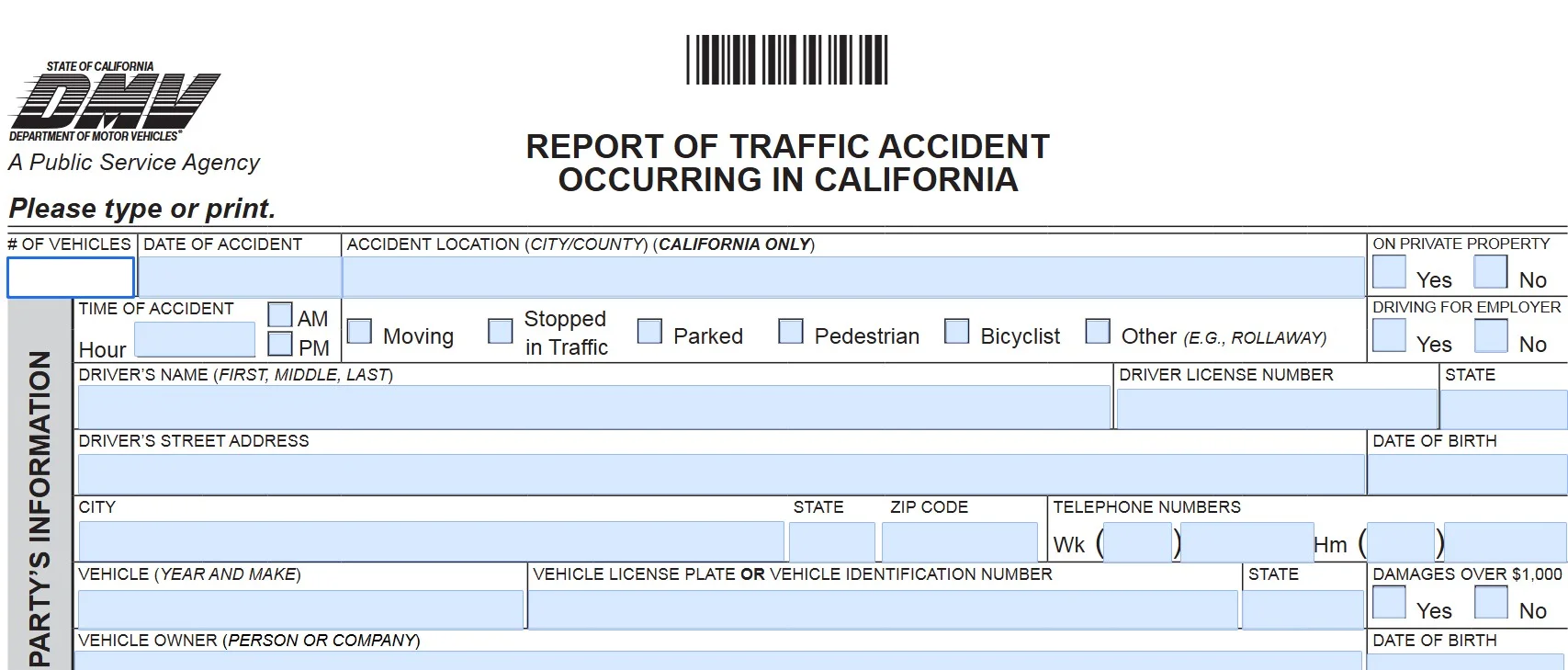
Details About the Drivers and Vehicles Involved
When you’re filling out the SR-1 form, getting the details right is incredibly important. The information you provide about the other drivers and their vehicles becomes part of the official record, which is essential for the DMV and any future insurance claims. Make sure to collect the full name, current address, and driver’s license number for every driver involved in the crash.
You should also note the make, model, year, and license plate number for each car. Lastly, be sure to get the insurance company name and policy number for everyone. This information helps the DMV confirm that all drivers are insured and builds the foundation for a strong auto accident claim, helping you recover the compensation you need for your injuries and other losses.
Is an SR-1 Form the Same as an Insurance Claim?
The SR-1 Form is not the same as filing an insurance claim. It’s a DMV requirement, but the two processes are closely connected. Here’s what drivers should know:
- The DMV uses the form to confirm that every driver involved in the crash had valid insurance.
- If one driver was uninsured, the DMV can suspend their license, and that detail can help in a personal injury case.
- If the other driver has little or no coverage, your own uninsured or underinsured motorist policy (UM/UIM) may apply.
- Insurance adjusters often look at the SR-1 report to verify timelines and facts. A late or missing filing can work against you.
An attorney can help coordinate your SR-1 submission with your insurance claim, ensuring everything lines up correctly and protecting you from tactics that reduce payouts.
Other Important Deadlines to Know
The 10-day window for the SR-1 form is just the first of several important timelines you need to be aware of after a crash. Missing these deadlines can seriously jeopardize your ability to get the compensation you need for medical bills, lost wages, and recovery.
Keeping track of everything while you’re trying to heal can feel overwhelming, but understanding these two key deadlines will help you protect your rights from the very beginning. At Deldar Legal, our team manages every critical date for our clients, ensuring that all paperwork is filed correctly and on time so they can focus on what matters most: their health.
Reporting to the Police or CHP
California law is clear: you must report any accident involving an injury, death, or property damage over $1,000 to the police or the California Highway Patrol (CHP). This isn’t just a suggestion; it’s a legal requirement that creates an official record of what happened.
A police report is an unbiased, third-party account that documents key details like the date, time, location, and parties involved. This report becomes a vital piece of evidence when dealing with insurance companies, who will look for any reason to question your claim. Making sure a report is filed for your auto accident provides a solid foundation for your case and helps establish the facts right away.
The Statute of Limitations for Injury Claims
In California, you have a strict deadline, known as the statute of limitations, to file a personal injury lawsuit. For most accidents, you have two years from the date of the incident to file your claim in court. If you miss this two-year window, you will likely lose your right to seek compensation forever, no matter how strong your case is. While two years might sound like a long time, it can pass quickly when you’re focused on medical treatments and recovery.
Building a compelling case for a catastrophic injury involves extensive investigation, evidence gathering, and negotiations with insurers. This is why it’s so important to speak with an attorney early on to ensure every deadline is met and your rights are fully protected.
What Compensation Can I Pursue After a Car Accident?
After you file your SR-1 and start your insurance claim, you may qualify for compensation based on your injuries and losses:
Economic damages:
- Medical bills and rehabilitation
- Lost wages or reduced earning capacity
- Vehicle repairs or property damage
Non-economic damages:
- Pain and suffering
- Emotional distress
- Loss of enjoyment of life
If your injuries are severe or long-term, you may also recover costs for future medical care, assistive devices, or home modifications. A skilled attorney can calculate these damages and negotiate with insurers on your behalf.
What If I Wasn’t Driving During the Accident?
Many Californians don’t realize that the California DMV SR-1 Form still applies even when they weren’t driving. If a vehicle strikes and injures a pedestrian, cyclist, or scooter rider, the driver (and in some cases the pedestrian’s insurer) must file the form with the DMV.
In these cases, the insurance and liability questions can be more complex. You may need to rely on the driver’s insurance, your own UM/UIM coverage, or both. Having an attorney handle this coordination can prevent conflicting claims or missed filings that hurt your case.
California SR-1 Form FAQs
No. You must file the California SR-1 Form even if you were not at fault for the accident.
No. A police report or insurance claim does not replace the legal duty of filing the SR-1 form.
If you miss the deadline, the DMV may suspend your driver license until you file the form.
You can submit the SR-1 Form online through the DMV website or you can print it and mail it directly to them.
Yes. If you discover that information is missing or incorrect, you can contact the DMV and submit an updated version or an additional document.
Speak With a California Accident Attorney Today
At Deldar Legal, we’re more than just attorneys, we’re your partners in recovery. If you’ve suffered an injury due to someone else’s negligence, you deserve a top-rated car accident lawyer in California who will fight for your rights and help you rebuild your life. From the moment you contact us, we handle everything, from medical appointments and transportation to insurance negotiations and legal paperwork, so you can focus on healing.
Our experienced team represents clients across a wide range of personal injury cases, including:
- Car, truck, and motorcycle accidents
- Uber and Lyft rideshare accidents
- Pedestrian and bicycle accidents
- Slip-and-fall and premises liability claims
- Dog bites and animal attacks
- Traumatic brain injuries, spinal cord damage, and other catastrophic injuries
- Wrongful death of a loved one
Deldar Legal is here to help. We offer free consultations and work on a no win, no fee basis, so there’s no risk in reaching out.
Call us today at (844) 335-3271 or contact us to speak with an experienced California injury lawyer. Let Deldar Legal fight for the justice and compensation you deserve.
Key Takeaways
- Filing the California DMV SR-1 Form is a legal requirement after a car accident involving injury or property damage over $1,000.
- You must submit the SR-1 Form within 10 days or risk losing your driver’s license and complicating your insurance claim.
- The form creates an official record of the accident and aids in recovering compensation for injuries and damages.
- Even non-drivers must file the SR-1 Form if they are involved in an accident, including pedestrians and cyclists.
- Consulting an attorney can help ensure correct filing and coordination with your insurance claims.