

An accident happens in seconds, leaving bystanders to make split-second choices about helping injured victims. In California, those who step up to provide aid are shielded by powerful legal protections.
If you have questions about a personal injury claim involving a bystander at the scene, contact Deldar Legal today for a free consultation.
The Good Samaritan law California has in place protects bystanders from civil lawsuits when they provide voluntary, good-faith emergency aid. Defined under California Health and Safety Code Section 1799.102, this statute ensures you cannot be sued for civil damages while trying to save a life.
What Is the California Good Samaritan Law?
The good samaritan law california protects everyday people who step up to help in a crisis. When a bad crash happens on the road, bystanders often feel afraid to act. They worry that they might face a lawsuit if they make things worse. This state law aims to remove that fear so people can save lives.
Core Statutory Protections
At its heart, this rule shields you from civil blame when you try to help someone in pain. Under the law, you cannot be sued for civil damages if your good faith efforts do not go well. The law applies to both medical care, like CPR, and nonmedical care, like pulling a person from a burning car.
The exact words of the law are very clear. The state code protects anyone who, “in good faith, and not for compensation,” gives help during a crisis. It says these helpers “shall not be liable for any civil damages” that result from their actions. This language forms a strong shield for volunteers.
Three Core Elements for Protection
To get this protection, your actions must meet three key tests:
- Act in good faith. You must genuinely want to help the victim, not use the emergency as cover for harmful behavior.
- Act without pay. You cannot expect or accept compensation for your help. The shield exists for volunteers, not paid responders.
- Give aid at the scene. Your help must happen right at the emergency location, not later at a hospital or clinic.
If you are hurt on the road, these rules can affect your case. Knowing how a helper’s actions impact your claim is a key part of California car accident laws. A driver or a bystander might try to use this law as a shield after a crash.
Key Limitations and Court Interpretations
The Good Samaritan law offers a strong shield, but it has clear boundaries. Both state courts and lawmakers have set strict limits on who is safe from a lawsuit. Knowing these limits can help you understand your rights after an emergency.
The Landmark Ruling of Van Horn v. Watson
In 2008, the California Supreme Court ruled on a major case called Van Horn v. Watson, 45 Cal. 4th 322. A rider pulled an injured friend from a crashed SUV, fearing the car was about to catch fire. The rescue left the victim paralyzed. The court ruled that the rescuer was not safe from a lawsuit because she did not give actual medical care at the scene.
This harsh ruling shocked the state. To fix the issue, the state legislature quickly stepped in to update the law. They amended California Health and Safety Code 1799.102 to protect helpers who provide non-medical aid too. Now, you do not need to be a doctor to get legal safety. You only need to try to help in good faith.
Gross Negligence and Paid Professionals
Even with these changes, the law does not shield you if you act with gross negligence. In legal terms, gross negligence means an extreme lack of care or an obvious disregard for safety. It is much worse than a simple mistake. This difference is a major part of California car accident laws when lawyers check who is at fault for a crash. If your actions are wild or reckless, you can still face a personal injury lawsuit.
Also, this law does not protect paid professionals. If a doctor, nurse, or EMT is on duty and acting within their job scope, they must follow strict standards. They do not get the same legal shield as an everyday bystander. If they make a careless error while on the clock, their employer can be held liable for the damages.
What Does the Good Samaritan Law Cover?
The good samaritan law california shields volunteers who step in to help during crises. This law covers many kinds of emergency aid.
Emergency Medical Care
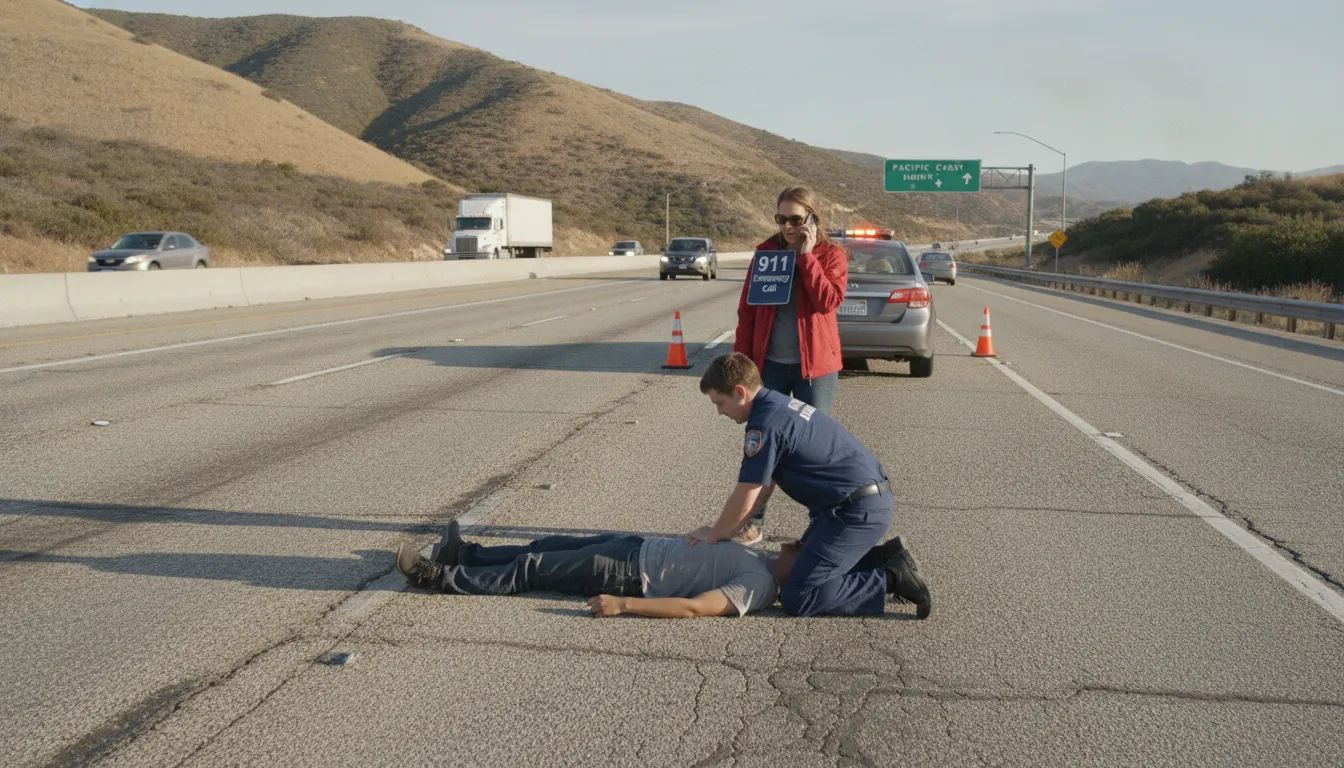
Many emergencies need quick medical aid. If you see a crash on the road, you may need to act fast. You can give CPR to someone whose heart has stopped. You can also apply pressure to a bleeding wound. Under California car accident laws, you are not sued for making a simple mistake while helping.
Other medical acts are also safe. You might help someone who is choking in a restaurant. You can use an automated external defibrillator if one is near. The law shields you if you act in good faith. You do not have to be a doctor to give this care. The state wants to protect normal people who try to do the right thing.
Non-Medical Rescue Actions
Help does not stop at medical care. Sometimes, you must pull someone out of a burning car. You might need to break a car window to save a child from extreme heat. These are non-medical acts of rescue. The law covers many scenarios:
- Pulling a driver from a crashed and smoking vehicle
- Clearing debris or wreckage to reach an injured person
- Directing traffic away from an accident scene to prevent further harm
- Helping someone escape a dangerous structure or falling object
- Providing basic first aid or comfort until paramedics arrive
The state wants volunteers to feel free to help others in a crisis. This is why the law protects both medical and non-medical aid at an emergency scene. If you drag someone away from a falling wall, you are covered. The key is that you acted to prevent harm.
Overdose Immunity Under AB 472
Drug overdoses are a major crisis in California. People used to fear calling for help because they did not want to face drug charges. To fix this, the state passed Assembly Bill 472, also known as the 911 Good Samaritan law. This rule protects you if you seek medical help for an overdose.
Under California Health and Safety Code 11376.5, you will not face charges for drug use or possession if you report an overdose in good faith. You must stay at the scene until help arrives. You must also work with medical and police staff. This law saves lives by helping people report overdoses fast.
If a bystander or loved one was harmed while trying to help at an emergency scene, reach out to Deldar Legal for a free case review. Our team understands the complex intersection of Good Samaritan protections and personal injury claims.
When Does the Good Samaritan Law Not Apply?
While the Good Samaritan law California uses to protect volunteers has strict limits, it does not apply in every case. California law draws clear lines to protect victims from bad actions and poor care.
| Protected Good-Faith Actions | Not Protected (Potential Liability) |
|---|---|
| Performing CPR on a crash victim | Moving a victim unnecessarily when no danger exists |
| Pulling someone from a burning vehicle | Providing care while intoxicated or under the influence |
| Calling 911 and staying with the victim | Deliberately causing further injury under the guise of help |
| Applying basic first aid to stop bleeding | On-duty medical professionals making errors within their job scope |
Gross Negligence and Willful Misconduct
The state protects volunteers who make honest mistakes, but this shield falls away if you act with gross negligence or want to cause harm. Gross negligence means a total lack of care for safety. Under California car accident laws, moving a crash victim when there is no clear danger can be seen as reckless. If your reckless choice makes an injury worse, you can face a lawsuit.
Willful misconduct goes beyond simple careless actions. It involves a clear intent to cause harm or a complete disregard for human life. If a person pretends to help but wants to hurt you, the law will not shield them. You can hold them fully liable for any harm they cause.
On-Duty Medical Professionals
The immunity law does not cover paid medical staff when they do their daily job. If a doctor or nurse treats you as part of their paid duties, they must meet standard care rules. They cannot claim they were acting as a good samaritan to avoid a medical malpractice claim. Also, if any medical expert acts far outside their training, they might lose protection since the law only covers true volunteer help.
Hospital Emergency Departments
Where you give aid also matters. Under California Health and Safety Code Section 1799.102, the scene of an emergency does not include a hospital. If you receive care in an emergency room, the staff cannot use this law to block a suit. The law is meant for sudden events on the street, not controlled medical spaces.
How the Good Samaritan Law Affects Personal Injury Claims
An accident can happen in a second. If you get hurt in a crash, a bystander might step in to help. But what happens if their help makes your injury worse? Under the good samaritan law california, helpers who act in good faith are safe from civil suits. This law aims to protect people who do the right thing during a crisis.
Bystander Actions and Civil Liability
If a helper tries to aid you after a crash, they have strong protections. If they make a simple mistake while giving CPR, they are not liable. These rules exist to encourage people to help during a crisis. But these protections only apply to help given at the scene of the emergency. They do not apply inside medical centers or offices.
If you stop to help someone in need, you are safe from being sued. This applies if you acted in good faith and did not take any pay. If the victim tries to sue you, the law acts as a strong shield. For example, if you pull someone from a burning car, you are safe from normal liability claims. This rule links closely to other California accident laws that encourage drivers to stay and help.
The Gross Negligence Exception
But this shield has limits. The state code does not protect helpers who act with gross negligence or willful misconduct. Gross negligence means an extreme lack of care. It is a major departure from what a reasonable person would do. For instance, if a helper moves an injured person in a reckless way and causes deep harm, they might be liable.
In these cases, you can still file a claim for your injuries. If a bystander’s wild actions caused you major harm, the court will look at what they did. If the court finds they acted with willful misconduct, their legal shield drops. This allows you to seek damages for your extra medical bills and pain.
The same legal principles that apply in car accident scenarios can also apply in other injury contexts. If you were hurt in a motorcycle accident, a truck crash, or a premises liability incident, a Good Samaritan immunity question could arise. Our team handles all types of injury cases across California.
Steps to Take After an Injury Involving Bystander Aid
If you were injured in an accident and a bystander’s actions may have made things worse, follow these steps to protect your legal rights:
- Seek medical care immediately. Your health comes first. Get a full evaluation and document every injury, even those that seem minor at first.
- Document the scene. Take photos and videos of the accident location, the bystander’s position, vehicle damage, and visible injuries before anything is moved.
- Collect witness information. Get names and phone numbers of everyone who saw what happened, including the bystander who provided aid.
- Preserve evidence. Keep damaged clothing, personal items, and any medical records related to the incident. Do not discard anything until your lawyer reviews it.
- Speak with a personal injury attorney. Before giving any recorded statement to an insurance company, consult with a lawyer who can evaluate whether the bystander’s actions involved gross negligence.
How a Personal Injury Attorney Can Help
Good Samaritan cases are rare and hard to prove. You must show that the helper’s action went far beyond a normal mistake. To see if you have a valid claim, you should speak with a skilled personal injury attorney. A lawyer can look at the facts and find if the helper was grossly negligent. If negligence from a different party like an impaired driver caused the accident, you may have additional claims.
At Deldar Legal, we know how to handle complex liability cases. We have won over $250 million for our clients by building strong cases and fighting hard. We do not make empty promises, but we will look at every detail to find the best path forward. In tragic cases involving loss of life, our wrongful death attorneys can help families pursue justice and fair compensation.
Frequently Asked Questions
Does the California Good Samaritan law protect against gross negligence?
No. Under Health and Safety Code 1799.102, legal protection does not cover gross negligence or willful misconduct. Gross negligence means an extreme lack of care or a blatant disregard for safety. If a helper acts with gross negligence and causes harm, you can still sue them for damages. An attorney can help you find out if a helper’s actions crossed this line.
Does the California Good Samaritan law apply to non-medical aid?
Yes. According to California state law, this protection covers both medical and non-medical aid in an emergency. For example, if you pull someone from a burning car, you are protected. The law is meant to encourage bystanders to volunteer and help others without the fear of lawsuits. You must act in good faith and not expect any pay.
What is the 911 Good Samaritan law in California?
This law, known as Assembly Bill 472, protects people who call 911 to report a drug overdose. Under Health and Safety Code 11376.5, you will not face possession charges if you seek help in good faith. It protects you and the victim from minor drug charges. This protection only applies if you stay at the scene and help the medical staff or police.
What counts as an emergency scene under California law?
Under California law, an emergency scene is a place where a sudden, unexpected accident occurs. This can include a car crash on a highway or a sudden medical event in a park. However, under state law, it does not include emergency rooms or places where medical care is normally given.
Can you file a personal injury claim if a bystander injures you?
Yes. You can file a personal injury claim if a bystander causes you harm through gross negligence or willful misconduct. While the law protects well-meaning helpers, it does not shield those who act with extreme carelessness. If a bystander’s reckless actions made your injuries worse, they can be held liable. Talking to a personal injury attorney can help you understand your legal options.
Ready to Talk to a California Personal Injury Lawyer?
When you are hurt in a bad accident, waiting to start your legal claim can hurt your chance of getting a fair cash settlement. Crucial proof at the crash scene can quickly vanish. Witness memories of the event will start to fade over time. Insurance companies often use any delay to claim that your injuries are not serious. By hiring a skilled personal injury lawyer right away, you protect your legal rights and start building a strong, trial-ready case.
Ready to talk to a lawyer? Our skilled legal team is ready to stand by your side and help you get justice. Call (844) 335-3271 to schedule a free consultation.