

An electric vehicle crash can leave behind risks that do not end at impact. Battery fires, silent acceleration, and complex software evidence can turn a routine claim into a high-stakes investigation.
Injured in an EV crash? Schedule a free consultation with Deldar Legal before vehicle data or damaged components disappear.
An electric vehicle accident lawyer investigates battery failures, driver-assistance systems, charging defects, crash data, and every party that may share responsibility under California law. Unlike a standard collision claim, an EV case may involve automakers, software developers, battery suppliers, repair shops, commercial drivers, and unsafe roadway conditions. Preserving event data, vehicle logs, surveillance footage, damaged components, and witness accounts early can show whether human error or a technical defect caused the crash. The lawyer can also document medical costs, lost income, property damage, long-term harm, and the risk of delayed battery fires. That evidence supports claims against insurers and other liable parties before crucial records disappear, damaged components are destroyed, or legal deadlines limit the available options.
The central question is not only who hit whom, but whether the vehicle, its software, or its battery caused or worsened the collision. Understanding those added risks can protect both the evidence and the value of a claim. The path begins with Why electric vehicle crashes require a different investigation.
Why Electric Vehicle Crashes Require a Different Investigation
An EV crash requires a different investigation because high-voltage components, battery damage, software records, and driver-assistance data may reveal how the crash happened. These details can also show who is responsible. Deldar Legal acts quickly to protect this technical evidence, your safety, and your legal options.
EV-specific hazards can increase the harm
Electric vehicles carry large battery packs and are often heavier than comparable gasoline vehicles. After a collision, damaged high-voltage components may pose risks that are not obvious at the scene. Pedestrians and cyclists may also have less warning when a quiet EV approaches at low speed.
Digital evidence can tell part of the story
Depending on the vehicle, useful evidence may include event data, camera footage, software versions, driver-assistance settings, mobile-app records, and service history. This information can be altered or lost when a vehicle is repaired, sold, or destroyed. An experienced investigation therefore treats the EV itself as evidence, not merely damaged property.
Battery Fires and Thermal Runaway Can Change an Injury Claim
Battery fires can change an injury claim by causing burns, smoke exposure, evacuation injuries, and the loss of important physical evidence. Deldar Legal investigates whether impact damage, a battery defect, a prior repair, or inadequate warnings contributed to thermal runaway and the resulting harm.
A severe impact can damage lithium-ion battery cells and trigger thermal runaway, a process in which heat spreads from one cell to another. A damaged battery may burn intensely or reignite after the initial fire appears controlled.
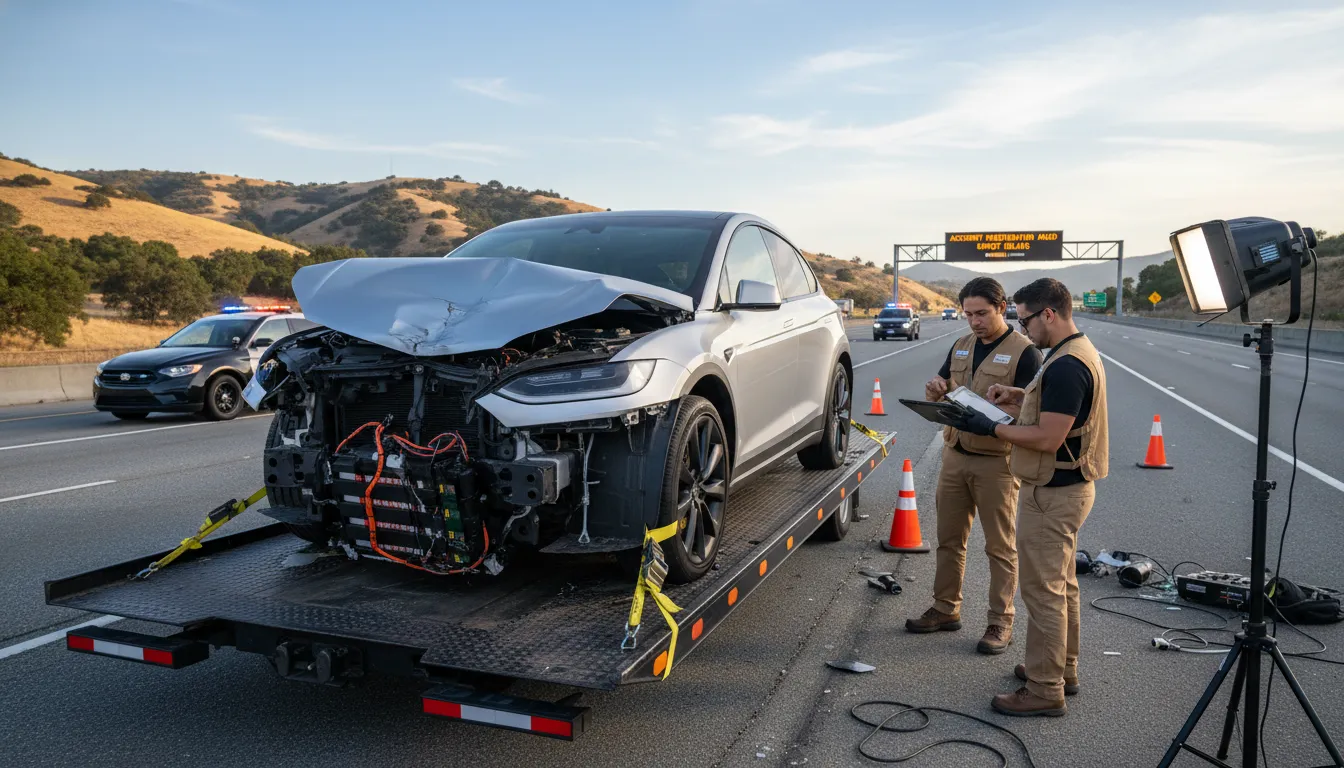
Put safety before evidence collection
If you notice smoke, unusual heat, hissing, popping, or a chemical odor, move away from the vehicle and warn first responders that an electric vehicle is involved. Do not touch exposed cables or attempt to inspect the battery yourself. Seek prompt medical care for burns, breathing problems, dizziness, or other symptoms.
The battery may become critical evidence
When a fire causes injury, investigators may need to examine whether crash forces alone caused the event or whether a battery defect. Manufacturing problem, inadequate warning, or prior repair contributed. The vehicle, battery pack, fire-department records, photographs, recall history, and maintenance documents should be preserved before they disappear. A product claim may exist alongside a negligence claim against an at-fault driver, but the facts must support it.
Who Is Liable When Driver-Assistance Technology Is Involved?
The driver, automaker, component manufacturer, repair provider, or another road user may be liable when driver-assistance technology is involved. Deldar Legal evaluates what each party did, what the system was designed to do, and what vehicle data shows about the moments before impact.
Most driver-assistance systems available today require an attentive human driver. A feature name or marketing phrase does not automatically make the vehicle fully autonomous.
| Potentially responsible party | Questions investigators may ask |
|---|---|
| Driver | Was the driver attentive, speeding, impaired, or relying on the system outside its intended use? |
| Vehicle or component manufacturer | Did a defect, inadequate warning, or unreasonable system behavior contribute? |
| Repair or service provider | Was a sensor, camera, battery, or safety system improperly repaired or calibrated? |
| Other road user | Did another driver, cyclist, or pedestrian act negligently? |
Preserve software and event data early
Relevant evidence may include vehicle logs, event data, camera recordings, software versions, update history, alerts, and driver inputs. Preservation requests should go out quickly because retention periods can be short and repairs may overwrite information.
How Recalls and Manufacturer Liability Affect EV Cases
A recall may reveal a known safety concern, but it does not automatically prove that a manufacturer caused a particular crash. Deldar Legal connects recall records, vehicle data, expert inspections, and injury evidence to determine whether a defective condition contributed to the collision or worsened the harm.
Vehicle owners can use the National Highway Traffic Safety Administration’s recall lookup tool and their vehicle identification number to check for open safety recalls.
Possible product-liability issues
A case may involve an allegedly defective design, a manufacturing error affecting one vehicle or batch, or inadequate instructions and warnings. Examples could include a battery problem, a faulty sensor, or a safety feature that did not perform as reasonably expected. Service records and recall notices can help experts evaluate these questions.
Do not let the vehicle disappear
Before authorizing repairs, salvage, or destruction, ask whether the vehicle should be preserved for inspection. Qualified experts may need to document the battery pack, electronic systems, crash damage, and component condition. That inspection can help distinguish an ordinary driver-negligence case from one that also involves a product or repair issue.
What Should You Do After an Electric Vehicle Accident?
After an electric vehicle accident, move away from immediate hazards, call 911, obtain medical care, document the scene, and preserve the vehicle and its digital records. Deldar Legal can then help secure technical evidence and communicate with insurers while you focus on treatment and recovery.
- Move away from immediate hazards. If it is safe, exit the roadway and keep your distance from smoke, heat, exposed cables, or a damaged battery.
- Call 911 and get medical care. Tell dispatchers that an EV is involved. Accept evaluation even if pain seems manageable, because some injuries are not immediately obvious.
- Document the scene. Photograph vehicle positions, damage, roadway conditions, charging equipment if relevant, and visible injuries. Collect witness and insurance information.
- Preserve the vehicle. Do not authorize destruction or major repair until important physical and electronic evidence has been considered.
- Save digital records. Keep screenshots and copies of app data, charging history, service notices, software updates, dash-camera footage, and messages about the crash.
- Get advice before a detailed insurer statement. Provide required notice, but consider speaking with counsel before giving a recorded account or signing a broad release.
These steps can feel overwhelming when you are also managing pain, medical appointments, transportation, and bills. Focus first on health and safety, then ask for help protecting the evidence.
What compensation may be available after an EV crash?
Compensation after an EV crash may include medical expenses, future care, lost income, reduced earning capacity, damaged property, pain, and other crash-related losses. Deldar Legal documents how the collision changed your health, work, and daily life, then pursues every responsible party and available policy.
Unsure what your EV injury claim may include? Talk with Deldar Legal about your legal options before accepting an insurer’s offer.
Medical costs and the personal impact
A California EV crash claim may seek payment for the harm caused by the collision. Recoverable losses can include emergency care, hospital bills, rehabilitation, medication, and other needed treatment. Future care may also matter when burns, head trauma, or other injuries require lasting support.
California law allows an injured person to seek damages that directly result from another person’s wrongful act. The state’s general measure of personal injury damages covers both financial and nonfinancial harm. Pain, emotional distress, lost enjoyment of life, and physical limits may be part of the claim.
Strong proof ties each loss to the crash. Medical records, treatment plans, expert opinions, bills, and a clear account of daily limits can show the full impact. A person should also keep receipts for travel, home help, and other injury-related costs.
Lost income and damaged property
Compensation may cover wages lost during recovery. It may also address reduced earning capacity when an injury limits future work or forces a career change. Pay records, tax documents, employer statements, and expert analysis can help show these losses.
Property losses may extend beyond repairing or replacing the EV. The claim may include damaged items inside the vehicle, towing, storage, and reasonable transportation costs. Evidence should show each expense and explain why the crash made it necessary.
- Past and future medical care.
- Lost wages and reduced earning capacity.
- Vehicle and personal property loss.
- Pain, suffering, and loss of enjoyment.
- Other reasonable crash-related expenses.
Insurance policies and responsible parties
An EV collision may involve more than one insurance policy or responsible party. Possible defendants can include a careless driver, an employer, a vehicle owner, or a maker of a defective part. The facts determine which claims and coverage may apply.
California generally limits a defendant’s responsibility for nonfinancial damages to that defendant’s share of fault. The rule appears in California Civil Code section 1431.2. This makes a careful investigation important when several parties may share blame.
An electric vehicle accident lawyer can review the crash, preserve evidence, and assess each possible source of payment. No specific result is assured. The available compensation depends on fault, insurance terms, injury proof, and the losses caused by the crash.
How an electric vehicle accident lawyer can protect your case
An electric vehicle accident lawyer protects your case by preserving technical evidence, identifying every potentially liable party, documenting your losses, and managing insurer communications. Deldar Legal builds each California claim with trial-ready preparation while you focus on medical care and recovery.
An EV crash can leave you facing pain, repair questions, missed work, and calls from several insurers. The work starts early because vehicles, data, and damaged parts may change or disappear.
Preserving the evidence trail
A lawyer can send preservation demands to drivers, vehicle owners, manufacturers, repair shops, charging providers, and other parties holding key evidence. These notices seek to protect the EV, battery, event data, software records, service history, photographs, and nearby video. The lawyer can also arrange secure storage and a joint inspection before anyone alters the vehicle.
Digital records may help explain speed, braking, driver inputs, warnings, and system behavior before impact. A lawyer can seek those records through formal requests and guard against incomplete downloads. The team can also check the National Highway Traffic Safety Administration recall database for open safety recalls tied to the model or vehicle identification number.
EV evidence can involve high-voltage systems, battery damage, software, and advanced driver assistance features. Qualified engineers, crash reconstruction specialists, fire investigators, or medical experts can help explain what the records mean. Their review can separate a driver mistake from a vehicle defect, poor repair, road hazard, or other cause.
Finding every source of fault and coverage
An investigation should look beyond the person behind the wheel. Depending on the evidence, fault may involve a vehicle maker, parts supplier, repair shop, commercial operator, property owner, or public agency. A lawyer can identify each party’s role and send targeted demands before records are lost.
Coverage can also come from more than one policy. Counsel can review personal, commercial, rideshare, fleet, uninsured motorist, and product liability coverage where each applies. A skilled car accident lawyer can coordinate those claims and challenge efforts to shift blame onto the injured person.
Building damages and meeting California deadlines
A strong claim connects the crash to its full effect on your life. The legal team can gather medical records, bills, wage proof, repair estimates, expert opinions, and notes about daily limits. This record shows both current losses and care or income problems that may continue.
California cases also involve filing deadlines and notice rules that depend on the parties involved. Claims against a public agency may require faster action than a standard injury claim. Working with a personal injury lawyer helps track those dates, preserve rights, and keep insurer requests from disrupting treatment.
Throughout the case, counsel can handle calls, organize proof, value the claim, and prepare for litigation when needed. That support matters when an insurer treats an EV crash like a routine collision. Careful preparation gives every liable party and available policy a proper place in the case.
For more guidance, review Deldar Legal’s resources on California auto accident claims, electric vehicle injury cases, Tesla accident claims, and California fault rules.
Vehicle data and damaged components can disappear quickly. Schedule a free EV accident consultation with Deldar Legal to protect your evidence.
Frequently Asked Questions
These answers address common questions about safety, battery-fire evidence, potential liability, and when to contact an electric vehicle accident lawyer. Deldar Legal can provide advice tailored to the facts of your California collision, injuries, insurance coverage, and vehicle technology.
What should I do after an electric vehicle accident in California?
After an electric vehicle accident, move away from traffic and watch for smoke, heat, hissing, or battery damage. Call emergency services, seek medical care, and avoid touching exposed cables or damaged battery components. Photograph the vehicles, road, charging equipment, and warning messages when safe. Exchange information, identify witnesses, report the crash, and preserve app data, dashcam footage, and repair records.
Can an electric vehicle battery fire affect evidence in an accident claim?
Yes. An electric vehicle battery fire can destroy physical evidence and complicate the investigation of a crash. Fire damage may hide whether a battery defect, impact, charging issue, or another cause contributed. Investigators may need vehicle data, photographs, fire reports, maintenance records, and expert inspections. Owners should avoid authorizing repairs, disposal, or salvage before important evidence has been preserved.
Who may be liable when an electric vehicle’s software or battery causes a crash?
Potentially liable parties may include a careless driver, the vehicle manufacturer, a battery or software supplier, a repair shop, or a charging equipment company. Liability depends on what caused the crash and whether a product defect, failed update, poor repair, or unsafe conduct contributed. A claim may involve negligence, product liability, or both, so preserving technical data and damaged components is important.
When should I contact an electric vehicle accident lawyer?
Contact an electric vehicle accident lawyer promptly when a crash causes injuries, serious property damage, a battery fire, or questions about vehicle technology. Early review can help preserve onboard data, app records, damaged parts, and charging history before they disappear. A lawyer can also identify possible defendants, coordinate technical experts, handle insurer communications, and evaluate the deadlines that apply to a California claim.
Ready to Protect Your California Electric Vehicle Claim?
Deldar Legal can help protect your California EV claim by preserving vehicle data, investigating every responsible party, and documenting the full impact of your injuries. A prompt consultation gives the legal team more time to secure evidence and prepare a clear strategy before deadlines approach.
Waiting after an electric vehicle crash can weaken your position if key vehicle data, witness details, medical records, or other evidence becomes harder to secure. Insurers may use delays to dispute the crash, question your injuries, minimize your losses, or pressure you before you understand every available legal option. Starting now gives your legal team more time to preserve evidence, review insurance coverage, identify responsible parties, and prepare a clear strategy before deadlines approach.
Ready to protect your rights and make informed decisions about your electric vehicle accident? Schedule a free consultation to talk with a California injury attorney about your options and the next steps that may support your claim today.