

An electric scooter can turn a short California commute into a serious medical emergency in seconds. A collision with a vehicle, a sudden fall, or a dangerous roadway can leave a rider facing head trauma. Fractures, abrasions, medical bills, and uncertainty about who should pay. If you were hurt, an electric scooter accident lawyer california can investigate the crash, identify every potentially responsible party, and explain your options under state law.
Speak with an experienced attorney today. Call (310) 270-7514 for a free, confidential consultation.
Our electric vehicle injury attorneys know the state’s definition of a motorized scooter covers a two-wheeled device with handlebars, a floorboard or seat, and an electric motor. California law generally does not require riders to carry financial responsibility coverage or register the scooter per California Vehicle Code sections 407.5 and 21224. Those rules do not make an injured rider responsible for every loss. Fault may involve the rider, a careless driver, a scooter company, a manufacturer, or a public entity responsible for a dangerous roadway. Understanding how these crashes happen is the first step toward preserving evidence and evaluating a claim.
Electric Scooter Accident Lawyer California: How Do Electric Scooter Accidents Happen in California?
Electric scooter accidents in California typically involve vehicle collisions, road hazards, or pedestrian conflicts. Riders share the road with cars, trucks, and pedestrians but have almost no physical protection. The injury rate for e-scooters is about 115 injuries per million trips, compared with 104 per million motorcycle trips, according to research cited in California injury litigation.
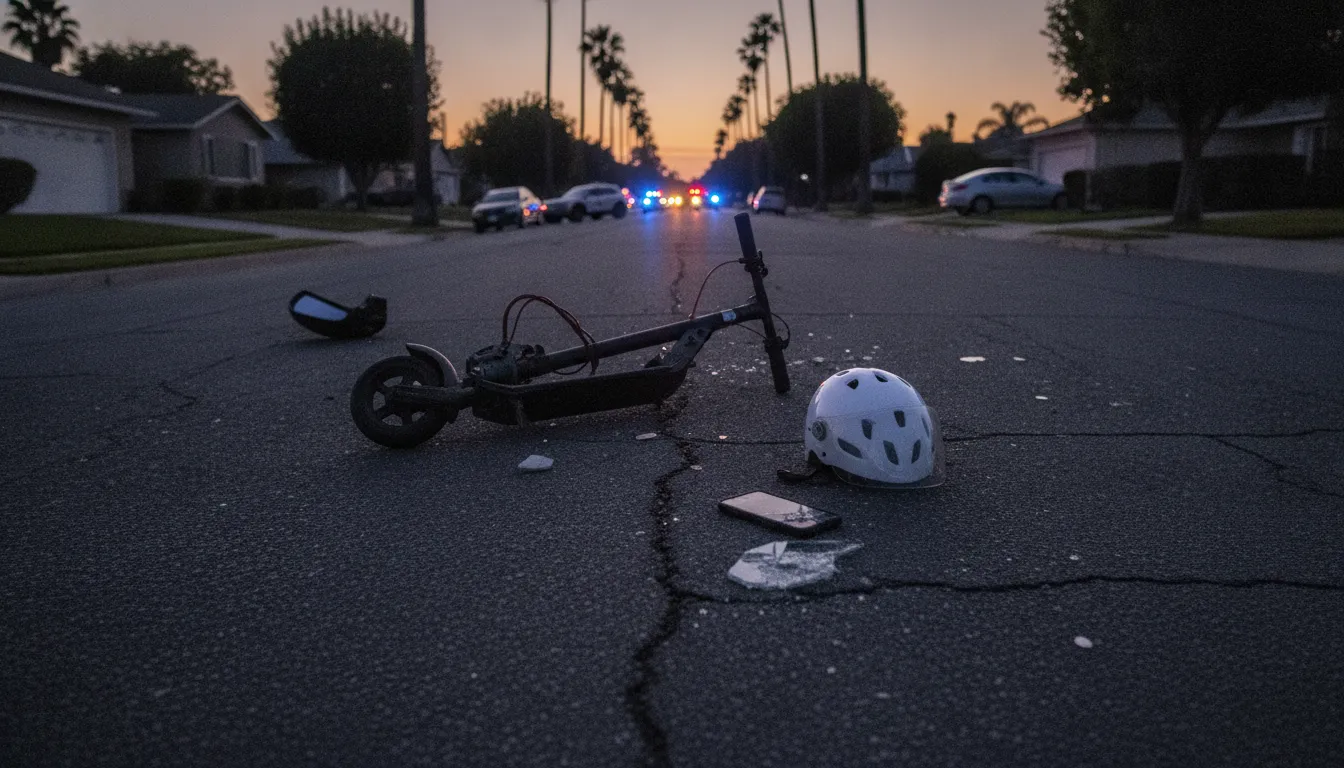
Car doors, turning vehicles, and sudden lane changes
A driver may open a door into a scooter’s path without checking for approaching riders. A vehicle turning across a bike lane or entering an intersection can create a similar hazard. Scooter riders are also vulnerable when a motorist changes lanes, pulls out of a driveway, or fails to yield. Even a collision at a relatively modest speed can throw a rider onto the pavement or into another vehicle. For more on vehicle-related injury claims, see our page on California car accident claims.
Potholes and other road hazards
Scooter wheels are smaller than most bicycle or motorcycle wheels, so potholes, broken pavement, uneven utility covers, and debris can destabilize the scooter quickly. Poor lighting or a blocked bike lane may prevent a rider from seeing the hazard in time. A fall caused by a dangerous roadway may raise questions about maintenance, warnings, and whether a public entity or another party contributed to the crash.
Pedestrian conflicts and crowded paths
Pedestrians may step into a bike lane, cross a sidewalk unexpectedly, or move between parked cars. Riders can also lose control while trying to avoid someone, particularly in busy downtown areas. When a scooter shares limited space with people walking, a sudden evasive maneuver can injure the rider, the pedestrian, or both. Visit our page on pedestrian accident claims in California for more on shared-roadway liability.
Determining what caused the crash is an important first step in identifying who may be responsible. For background, review our guide to California electric scooter laws.
Who Is Liable for an Electric Scooter Accident in California?
Liability for an electric scooter accident in California is not always straightforward. Responsibility may rest with one person or be shared among several parties, including the rider. A scooter company, a vehicle driver, a manufacturer, or a government entity responsible for a dangerous roadway. California applies a comparative fault system, so a rider’s partial responsibility does not automatically block recovery.
The rider may share responsibility
A rider can be held responsible for unsafe speed, ignoring traffic rules, riding while impaired, or failing to keep a proper lookout. California generally applies a comparative fault system. If an injured person is found partly responsible, that person’s damages may be reduced by the percentage of fault assigned to them. A rider’s mistake does not automatically excuse other negligent conduct. The facts, evidence, and conduct of every involved party must be examined.
Scooter companies and manufacturers
Companies such as Bird or Lime may face a claim when poor inspection, inadequate maintenance, defective brakes, worn tires, or another equipment problem contributes to a collision. A product liability claim may also apply when the scooter was defectively designed or manufactured. Establishing these theories usually requires preserving the scooter, maintenance records, rental data, inspection history, and communications about known problems.
Under California Vehicle Code section 407.5, manufacturers must disclose that a buyer’s existing insurance policy may not cover a motorized scooter accident. Riders should not assume that an auto or homeowners policy will pay simply because a vehicle was involved.
Motorists and dangerous roads
A driver who turns across a scooter’s path, opens a car door into the rider, speeds, or fails to yield may be liable. In other cases, a city or other public entity may be responsible for a hazardous pothole. Broken pavement, missing warning, or other roadway condition, subject to special rules and notice requirements for government claims.
California law generally exempts motorized scooter operators from financial responsibility, registration, and license plate requirements under Vehicle Code section 21224. That exemption does not eliminate a negligent party’s potential liability, but it can leave injured riders facing an insurance gap. For a brief overview of California electric scooter regulations, review the firm’s related resource.
What Does California Law Say About Electric Scooters?
California law treats a motorized scooter as a specific type of vehicle. Under California Vehicle Code section 407.5, it is a two-wheeled device with handlebars, a floorboard designed for standing or a seat with footrests, and an electric motor. That definition matters because the rules can differ from those governing motorcycles, bicycles, and cars.
Where can you ride an electric scooter?
California generally permits motorized scooters on a bicycle lane or roadway, subject to local restrictions and posted rules. Riders should not assume that a sidewalk is a lawful alternative. Local governments may also regulate scooter use in particular areas, so signs and municipal ordinances can affect where a rider may travel. A driver opening a door, turning across a lane. Or failing to yield can still be responsible for a crash even when the rider is using a permitted route.
What are the age, helmet, and speed rules?
A person must generally be at least 16 years old to operate a motorized scooter in California. Riders under 18 must wear a properly fitted, fastened bicycle helmet that meets applicable safety standards. The speed limit for a motorized scooter is generally 15 miles per hour, including when traveling in a bicycle lane or on a roadway. Exceeding the limit can affect how fault is evaluated, but it does not automatically excuse a motorist or another negligent party whose conduct caused the collision.
Does an electric scooter need registration or insurance?
California Vehicle Code section 21224 generally exempts people operating motorized scooters from the state’s financial responsibility, registration, and license plate requirements that apply to motor vehicles. That exemption does not eliminate a rider’s potential responsibility for negligent conduct, and it can create uncertainty about which insurance policy will respond after an injury.
California also requires scooter manufacturers to disclose that a buyer’s existing insurance policy may not cover scooter-related accidents and to advise the buyer to check with an insurer or agent. For a deeper overview, read our complete guide to California electric scooter laws.
The official statutes are available through the California Legislative Information website, including the definition and manufacturer disclosure requirements, and Vehicle Code section 21224, which addresses registration and financial responsibility.
What Injuries Are Most Common in Electric Scooter Accidents?
Electric scooter crashes can cause serious injuries even at moderate speeds. A fall at roughly 15 miles per hour can throw a person onto pavement or into the path of a vehicle. Creating forces that may cause lasting damage across the head, bones, skin, and internal organs. Some symptoms do not appear immediately, making prompt medical evaluation critical.

Head trauma and traumatic brain injuries
Head injuries are among the most common injuries reported after electric scooter accidents. A rider may suffer a concussion, skull fracture, bleeding in the brain, or another traumatic brain injury after striking the ground, a curb, or a vehicle. Symptoms can include confusion, headaches, dizziness, vomiting, memory problems, and unusual fatigue. A person who appears alert after a crash can still need prompt medical evaluation. For more on head injury claims, see our page on traumatic brain injury cases in California.
Fractures and orthopedic injuries
Riders often instinctively extend their arms or legs to break a fall. That reaction can lead to broken wrists, hands, arms, elbows, shoulders, ankles, or legs. A direct impact may also fracture the pelvis or ribs. These injuries can require surgery, physical therapy, and time away from work. Visit our page on spinal cord and orthopedic injury claims for more information.
Road rash, abrasions, and internal injuries
When exposed skin slides across asphalt, road rash can remove several layers of skin and leave painful wounds vulnerable to infection and scarring. Internal injuries can be harder to recognize. Blunt force may damage the abdomen, chest, or internal organs without producing an obvious wound. Increasing pain, abdominal swelling, shortness of breath, fainting, or blood in the urine requires urgent medical attention.
| Mode of transport | Injuries per million trips |
|---|---|
| Electric scooter | 115 |
| Motorcycle | 104 |
| Car | 8 |
Federal injury data illustrates the scope of the risk. The U.S. Consumer Product Safety Commission reported 360,800 emergency department visits and 233 deaths associated with e-bikes, e-scooters. And hoverboards from 2017 through 2022, with 46% of the injuries occurring in 2022 alone (CPSC). Children age 14 and younger accounted for 36% of reported injuries.
What Steps Should You Take After an Electric Scooter Accident in California?
An electric scooter crash can leave you dealing with pain, missed work, medical bills, and uncertainty about who is responsible. Taking organized steps early can protect your health and preserve information that may matter to an injury claim. Contact an experienced California personal injury lawyer as soon as possible after seeking medical care.
-
Seek medical attention immediately
Call 911 or go to an emergency department when injuries are serious. Otherwise, arrange prompt medical evaluation even if symptoms seem manageable. Head injuries, fractures, internal injuries, and other trauma may worsen or become more apparent over time. Follow the provider’s instructions, attend recommended appointments, and keep records of treatment, prescriptions, restrictions, and expenses.
-
Document the accident scene
If you can do so safely, photograph the scooter, your visible injuries, damaged clothing, the roadway, lighting, traffic signals, potholes, debris, and surrounding businesses. Take wide photographs that show the location and closer images that capture damage. Ask witnesses for their names and contact information.
-
Report the crash
Notify the police or appropriate local authority and request information about the report. If the scooter was rented, report the incident to the scooter company through its app or customer-service channel. Save confirmation emails, claim numbers, and every message exchanged. Give accurate facts, but avoid guessing about fault or minimizing your injuries.
-
Preserve evidence
Keep the helmet, clothing, shoes, and damaged personal property in their post-crash condition. Do not repair, discard, or return the scooter until its condition has been documented. Preserve rental receipts, ride history, account records, app messages, and phone location or activity data.
-
Speak with a personal injury attorney before insurers
Insurance representatives may seek a recorded statement or early settlement before the full extent of your injuries and available coverage is known. Consider speaking with a knowledgeable electric scooter accident lawyer California before signing documents or discussing fault. A firm with over $250 million recovered for California injury victims understands these complexities, while every case still depends on its specific facts and applicable law. For more guidance, review these steps to take after a California accident.
How Deldar Legal Can Help After an Electric Scooter Crash
An electric scooter crash can leave you dealing with pain, missed work, medical bills, and uncertainty about who should be held responsible. Deldar Legal brings a trial-ready approach to these cases, combining careful investigation with compassionate guidance. Our attorneys examine the full picture, including the rider’s actions, roadway conditions, vehicle involvement, scooter-company conduct, and potential insurance coverage.
Preserving evidence before it disappears
Evidence can become harder to find with every passing day. Deldar Legal can move quickly to preserve important information, including video footage, telematics data, photographs, maintenance records, and witness statements. Our rapid-response process may begin the same day you contact the firm.
A trial-ready strategy from the beginning
Although many injury claims resolve through negotiation, preparation should not depend on an assumption that settlement is the only path. Deldar Legal prepares cases with the evidence, legal analysis, and advocacy needed to pursue justice in negotiations or in court. The firm has recovered more than $250 million for California injury victims. That record reflects past results, not a promise about any individual case. Every case is different, and results depend on the specific facts and applicable law.
California experience without upfront fees
California’s rules and insurance issues can vary depending on the facts of a scooter crash. Deldar Legal serves injured people across Northern California, the Central Valley, and Southern California, with a focus on clear advice grounded in California law. The firm handles injury cases on a contingency fee basis, so clients do not pay attorney fees upfront. Deldar Legal also advances case costs, allowing you to focus on medical care while the legal team investigates your claim.
Call (310) 270-7514 for a free consultation with an electric scooter accident lawyer California today.
Frequently Asked Questions
What is the California law on electric scooters?
California defines a motorized scooter as a two-wheeled device with handlebars, a floorboard or seat, and an electric motor. Under Vehicle Code section 21224, riders generally do not need vehicle registration, license plates, or proof of financial responsibility. Other rules still apply, including restrictions on how and where a scooter may be operated.
Who is liable for an electric scooter accident?
Responsibility depends on the facts. A claim may involve a negligent driver, the scooter rider, a rental company, a manufacturer, or a government entity responsible for a dangerous road condition. Evidence such as photographs, witness information, maintenance records, and collision reports can help determine which parties contributed to the injuries.
Will insurance pay for an electric scooter accident?
Coverage is not automatic. California law requires scooter manufacturers to disclose that a buyer’s existing insurance policy may not cover scooter accidents. And it advises buyers to ask their insurer or agent about coverage under Vehicle Code section 407.5. Available coverage may depend on the at-fault driver’s policy, the rider’s policies, and the specific facts of the collision.
What should I do after an electric scooter accident in California?
Seek medical attention promptly, even if symptoms seem minor. Report the collision when appropriate, photograph the scene and visible injuries, save the scooter and related records, and collect witness contact information. Avoid giving a recorded statement or accepting a settlement before you understand the full extent of your injuries and potential claims.
How much does an accident lawyer charge in California?
Many personal injury lawyers, including Deldar Legal, handle qualifying cases on a contingency-fee basis, meaning there are generally no upfront attorney fees. The fee arrangement and case costs should be explained in a written agreement before representation begins. Every case is different, so discuss the specific terms during a consultation.
Can I sue if the scooter had a mechanical defect?
Yes. If a faulty brake, worn tire, defective design, or poor maintenance contributed to the crash. The rental company or manufacturer may be held liable under product liability or negligence theories. Preserving the scooter, maintenance records, and rental data is critical to building this type of claim.
Ready to Discuss Your Electric Scooter Accident?
After a scooter crash, understanding who may be responsible can help you make informed decisions about your recovery. Schedule a free consultation with a California electric scooter accident attorney at Contact Deldar Legal or call (310) 270-7514. The circumstances of every case are different, so a conversation about your injuries and what happened can help clarify your options. Deldar Legal proudly serves clients throughout California, including Los Angeles, San Diego, San Francisco, Sacramento, San Jose, and all surrounding communities.