

An attack on an apartment complex, parking lot, store, or other property can leave you facing painful injuries, medical bills, lost wages, and difficult questions about who should have prevented it. California law does not make every property owner responsible for every crime. The facts may matter, including prior incidents, warning signs, the property’s conditions, and whether reasonable security measures were available.
Call (844) 335-3271 or request a consultation with Deldar Legal to discuss what happened.
A negligent security lawsuit may be possible when criminal conduct causes harm and a property owner, manager, or other responsible party failed to take reasonable steps against a foreseeable risk. Building the claim usually requires evidence of notice, inadequate security, causation, and your resulting damages. Every case depends on its specific facts and applicable law.
Evidence can disappear quickly, especially surveillance video, incident reports, witness memories, and records showing earlier problems. Understanding how California courts evaluate security duties is the first step toward protecting your rights.
What Is a Negligent Security Lawsuit in California?
A negligent security lawsuit in California is a premises-liability claim involving injuries caused by another person’s criminal act. The central allegation is not simply that a crime occurred. It is that a property owner or manager failed to take reasonable security steps, and that failure contributed to foreseeable harm to someone legally on the property. Read the California Supreme Court discussion of criminal acts on business property.
This theory is narrower than a general claim that a property was unsafe. A broad premises-liability case may involve a dangerous physical condition, such as a defective surface or spill. A negligent security case focuses on the relationship between the property, the risk of criminal activity, the security measures that were used or omitted, and the resulting injury. The distinction matters because the analysis must address criminal conduct by a third party, not just a condition created directly by the owner.
What reasonable security means
California law does not require every property to have the same security plan. What is reasonable depends on the type of property, the history of crime in the area, and the circumstances surrounding the incident. Depending on the facts, the analysis may involve lighting, locks, access controls, surveillance, staff procedures, or other precautions. A missing security guard is not automatically proof of negligence. California courts evaluate whether the owner owed a duty to provide guards or another measure based on the specific property and incident.
Foreseeability is therefore a central issue. Prior similar incidents, known warning signs, or information available to the owner may help show that a risk should have been anticipated. Police reports and internal security logs may be relevant evidence. A property owner does not become an insurer against every unexpected criminal act, and the existence of an injury alone does not establish liability. The question is whether the evidence supports a connection between a foreseeable risk, an unreasonable omission, and the harm suffered.
Why the property and responsible parties matter
For context on the broader framework, you can review California premises liability rules and guidance on preserving property injury evidence. A negligent security claim is evaluated on its own facts, evidence, and applicable California law.
What Must You Prove in a Negligent Security Claim?
A criminal attack can leave you facing medical bills, lost income, and lasting fear. But the fact that a crime occurred on someone else’s property does not, by itself, establish legal liability. A negligent security claim asks a more specific question. Did a property owner, manager, or other responsible party fail to address a foreseeable risk? Did that failure contribute to your injury?
In California, negligent security is generally analyzed as a premises liability theory. The claim is fact-specific, and the evidence must connect the property’s security conditions to the harm you suffered. The following issues commonly shape that analysis.
Duty and lawful presence
First, you must identify why the defendant owed you a duty of reasonable care. That may depend on the defendant’s relationship to the property, control over the area, and your reason for being there. A customer, tenant, guest, employee, or other lawful visitor may have a different relationship to the property than a trespasser. Lawful presence is important because a negligent security theory generally concerns the protection of people who are legally on the premises.
California courts do not automatically require every property owner to provide guards or every possible security measure. The duty depends on the circumstances, including the type of property, its location, known risks, and the nature of the incident. A California premises liability rules analysis can help explain how ownership, control, notice, and the condition of the property fit together.
Breach and foreseeability
Next, the evidence must support an argument that the defendant breached its duty by failing to act reasonably. Reasonable security is not a fixed checklist. It may depend on the property’s crime history and other surrounding circumstances. Prior similar incidents, police reports, internal security logs, warnings, or recurring problems in a parking area may support an argument that a comparable attack was foreseeable. The absence of adequate lighting, functioning surveillance, locks, access controls, or other precautions may also matter, depending on the facts.
Foreseeability does not mean the owner had to predict the exact date, attacker, or method of the crime. It means the evidence may show that a risk was sufficiently apparent that reasonable precautions should have been considered. The proposed precaution must also be evaluated in context. California law does not treat every security measure as mandatory simply because it might have helped in hindsight. The question is whether the defendant’s response was reasonable before the attack, based on information then available. For a general discussion of the legal theory, see the overview of negligent or inadequate security claims.
Causation and damages
You must also connect the alleged security failure to the injury. This can involve showing that a reasonable precaution could have reduced the risk, delayed the attack, deterred the conduct, or allowed an earlier response. Investigators may examine the scene, policies, incident history, video, reports, witnesses, and communications.
Finally, you must prove actual harm. Depending on the evidence, damages may include medical expenses, lost wages, physical pain, emotional trauma, and other losses caused by the injury. A claim may involve more than one potentially responsible party, including an owner, lessee, manager, security provider, commercial defendant, or government entity. If multiple parties or the injured person share responsibility, California comparative fault rules may affect the recovery. Each negligent security lawsuit must therefore be evaluated using its own facts, evidence, and applicable law.
How Do Foreseeability and Notice Shape Liability?
California does not treat every criminal act on private property as proof of negligent security. The central question is whether the risk was reasonably foreseeable and whether the owner, manager, or other party responsible for the premises had notice of facts showing that additional protection may have been needed. Foreseeability is evaluated from the property, the surrounding circumstances, and the information available before the incident, not only from the harm that ultimately occurred.
Prior similar incidents can be especially important. A pattern of robberies, assaults, trespassing, or other threats may make a later event easier to anticipate. Evidence may include police reports, calls for service, internal security logs, incident reports, tenant complaints, employee warnings, and threat-related communications. Nearby crimes may also matter when they show that the risk was not isolated. See the California negligent security overview.
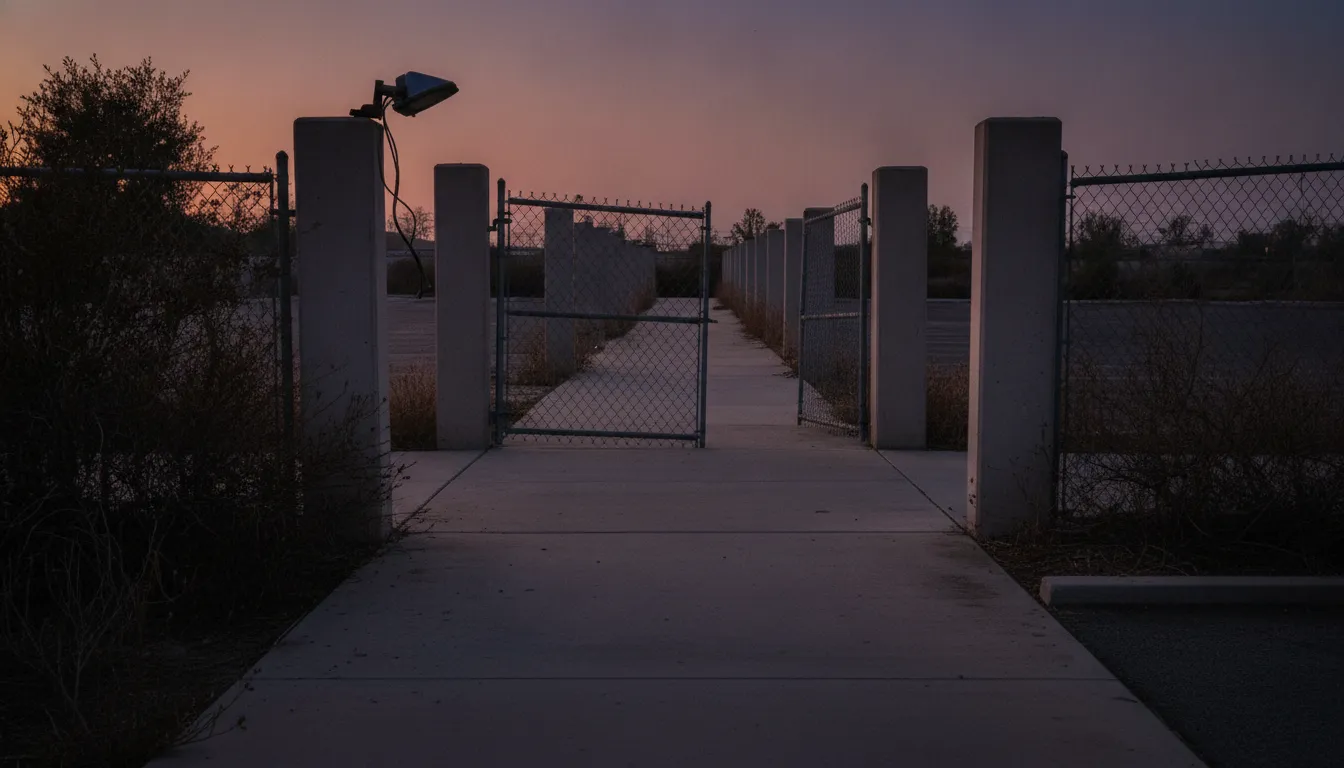
Notice does not always require a prior incident that is identical in every detail. A property operator may receive notice through repeated complaints, a broken access point, inadequate lighting, an employee report, or a security provider’s warning. The timing matters. Information learned after an attack may help explain the property’s history, but liability generally turns on what a reasonable decision-maker knew or should have known before the injury.
The proposed precaution must be practical in context
Once a risk is identified, the analysis also considers the burden and usefulness of a proposed precaution. The question is not simply whether a security measure might have been possible. It is whether the circumstances made a reasonable response appropriate, such as repairing a known gate, improving lighting, controlling access, responding to repeated warnings, training staff, or arranging additional monitoring. California courts have emphasized that whether a property owner owed a duty to provide security guards depends on the facts of the particular property and incident, rather than an automatic rule requiring guards everywhere. Ann M. v. Pacific Plaza Shopping Center illustrates that fact-specific duty analysis.
| Evidence or circumstance | What it may help show | Why context matters |
|---|---|---|
| Prior similar crimes | A recurring risk may have been foreseeable. | Location, timing, frequency, and similarity should be examined. |
| Police reports and security logs | Actual or documented notice to the property operator. | Records may identify warnings, responses, and unresolved conditions. |
| Complaints and employee warnings | People connected to the property raised a safety concern. | The decision-maker, date, and response can affect the analysis. |
| Developing threat | A new condition may require a timely response. | The proposed precaution must be reasonable under the circumstances. |
| Security measure’s burden | Whether a precaution was practical and proportionate to the risk. | California law does not automatically require the most expensive measure. |
A careful investigation looks beyond the incident. It may compare historical reports with policies, maintenance records, staffing, warnings, and responses. Deldar Legal emphasizes documenting dangerous conditions and researching historical incidents because those records can change or disappear. An early review can identify which notice and foreseeability questions require answers.
Which Security Failures and Defendants Matter?
A security case often turns on what should have been done before the attack and who had the authority to do it. The answer is rarely limited to whether a camera existed. Investigators may examine the property’s layout, prior incidents, lighting, access points, staffing, warnings, and the way employees responded to known risks. A condition that appears minor in isolation may matter when combined with a history of similar crimes or an unsecured area.
Examples of potentially inadequate security
Common allegations include poor or broken lighting in a parking lot, hallway, or stairwell. Other examples include defective locks, unsecured gates, and cameras that were missing, broken, or not monitored. Additional issues may include weak access controls, ignored unauthorized entry, inadequate employee training, or no security personnel when the property’s risks allegedly warranted them. These examples do not establish liability by themselves. California courts evaluate the property and incident, including whether a proposed precaution was reasonable and whether the criminal conduct was foreseeable.
Evidence may include maintenance records, security contracts, incident reports, police reports, access logs, complaints, surveillance footage, and communications about prior threats. Historical incidents can help show what a responsible party knew or should have known. Conditions can change quickly, so photographs and prompt preservation requests may be important. Review California premises liability rules for related guidance.
Control often matters more than the label
The potentially responsible parties may include the property owner, a landlord, a tenant or lessee, a business operator, a property manager, or a security company. The central question is what each party controlled, what each party knew, and what each party agreed to provide. An owner may control common areas, lighting, gates, or building-wide security. A landlord may retain duties under a lease or property-management arrangement. A store, apartment operator, hotel, or venue may control daily operations, employees, warnings, and access procedures.
A security contractor may be involved when its contract, assigned duties, staffing, monitoring, or response is relevant to the injury. Contracts, post orders, training records, schedules, and communications can help clarify those roles.
Public entities may also become involved when the incident occurred on government-controlled property, but claims against public entities can involve distinct procedures and deadlines. A case may therefore include multiple defendants, and responsibility may be divided based on the evidence. If injuries are severe or permanent, the analysis may also overlap with catastrophic injury claims. Every negligent security lawsuit is fact-specific. Identifying the right defendants requires examining control, notice, reasonable precautions, causation, and the applicable California law rather than assuming the property owner is the only possible target.
What Evidence Should You Preserve After an Attack?
After an attack, your first priority is safety and medical care. Once immediate danger has passed, evidence can help explain what happened and what the property knew. Surveillance footage may be overwritten, lighting may be repaired, and witnesses may forget details. Preserve what you can safely, and avoid confronting the property owner or suspected attacker.

- Get medical care and preserve the records. Seek emergency treatment when needed, then follow the recommended care plan. Save discharge papers, diagnoses, prescriptions, bills, photographs of visible injuries, and notes about pain or limitations. Tell medical providers accurately how the injury occurred. Medical records can document both the immediate harm and the continuing effect on work, daily activities, and family responsibilities.
- Report the attack and request the report number. Contact law enforcement when appropriate and keep the incident or police report information. Ask how to obtain a copy and note the names or badge numbers of responding officers. Police reports may also help establish prior criminal activity or the circumstances known immediately after the incident. In a negligent security lawsuit, police reports and internal security logs can be relevant to notice and foreseeability.
- Photograph the scene and security conditions. Take clear photographs of the location, entrances, exits, gates, locks, stairwells, parking areas, lighting, signs, cameras, and any obstruction that affected visibility. If you cannot safely return, ask a trusted person or attorney to document the area. Include wider scene photographs as well as close-ups, and keep the originals with their dates and file information.
- Identify witnesses promptly. Write down the names, phone numbers, email addresses, and physical descriptions of people who saw the attack, heard warnings, observed the area before or afterward, or spoke with staff. Ask only for contact information and a basic account. Do not pressure witnesses to adopt a particular version of events. Their observations may become important if memories change or the property condition is repaired.
- Retain incident reports and property communications. Save emails, text messages, online complaint confirmations, letters, receipts, and messages exchanged with the property owner, landlord, manager, business, security company, or insurer. Do not discard your own notes about conversations. Internal security logs and prior incident records may help show what the property knew, but those records may need to be formally requested or preserved.
- Request preservation of surveillance video quickly. Send a dated written request asking the property owner, manager, business, or security vendor to preserve footage before it is overwritten. Identify the location and time window. Ask that relevant footage from entrances, parking areas, hallways, elevators, and nearby cameras be retained. Do not assume that a camera was working or that a request means the footage will be provided. Police reports and security logs may also help document the security history.
- Preserve communications, but be cautious with insurers. Keep letters, emails, texts, voicemails, and claim numbers. Avoid a recorded statement or broad release until you understand the request. Read releases carefully and ask counsel about questionable requests.
Preserving evidence does not determine whether a claim will succeed. A California negligent security case depends on the specific property, incident, security history, responsible parties, and applicable law. If you were seriously injured, consider obtaining legal guidance before signing releases or allowing important evidence to disappear.
How Do Comparative Fault and Damages Affect Recovery?
A negligent security claim can raise difficult questions about responsibility. The property owner, business operator, manager, security contractor, or another party may dispute what happened. An insurer may also argue that your own choices contributed to the injury. These arguments do not decide the case by themselves. They must be tested against the evidence, the applicable law, and the specific circumstances surrounding the attack.
California uses a comparative fault approach
California comparative fault can reduce an injured person’s recovery when multiple parties share responsibility. The case may examine both the conduct of property-side defendants and the claimant. For example, the evidence may address whether a person had a reason to be on the property and whether warnings were visible. It may also address what the person knew about a danger and whether that conduct contributed to the harm. The analysis is fact-specific. It is not a blanket rule that excuses a property owner from investigating foreseeable security risks.
Responsibility may also be divided among more than one defendant. A commercial property claim can require identifying the parties who controlled the premises, managed common areas, hired security personnel, or had relevant contractual duties. The allocation may depend on documents, lease terms, security agreements, incident records, witness testimony, and other proof. Deldar Legal’s California comparative fault rules resource provides additional background on how shared responsibility may affect an injury claim.
Damages reflect the harm, not a promised result
Damages in a negligent security lawsuit may include reasonable medical expenses, lost wages, physical pain, and emotional trauma. Depending on the facts, the evaluation may also consider continuing treatment, diminished ability to work, changes to daily life, and the effect of serious injuries on family relationships. Documentation matters. Medical records, bills, employment information, treatment recommendations, and testimony about day-to-day limitations can help establish the nature and extent of the loss.
The amount and types of damages that may be legally available depend on the injury, causation, proof, and applicable law. A claimant should be cautious about accepting an early payment or making a recorded statement before understanding the full scope of the harm. An early offer may not account for future treatment or lasting effects, while an insurer’s position may not reflect the complete evidence.
Every negligent security case is different. Results depend on the facts, the law, and the evidence, and no attorney can commit to a particular recovery. A careful evaluation should address comparative fault, each potential defendant’s role, and the damages that can be supported by reliable documentation.
What Are the California Filing Deadlines?
Deadlines can determine whether an otherwise serious injury claim can move forward. In a negligent security lawsuit, the timeline may depend on when the injury occurred, who controlled the property, whether the defendant is private or governmental, and whether a legal exception or tolling rule applies. The date of the attack is important, but it is not always the only fact a lawyer must examine.
For many personal injury claims against private parties, California Code of Civil Procedure section 335.1 provides a two-year limitations period for an injury caused by the wrongful act or neglect of another. That general rule may be relevant when an assault or other criminal act occurred on privately owned or operated property. It should not be treated as an automatic answer for every case. The correct analysis can change based on the defendant, the claim being asserted, and the facts surrounding when the injury or legal claim became known.
Exceptions and tolling issues require care. They may involve a minor claimant, the date an injury or its cause was discovered, the identity or status of a defendant, or another circumstance recognized by California law. These issues are fact-specific. Waiting because you expect an exception can create unnecessary risk.
Claims involving a city, county, transit agency, school district, or another public entity follow a separate process. Under California Government Code section 911.2, a claim relating to injury to a person generally must be presented within six months after accrual. A public-entity claim is not the same as filing a civil lawsuit. If the claim process applies, additional requirements and later deadlines may also matter. Government Code section 945.6 addresses the time to bring suit after the public-entity claim process, subject to the circumstances and applicable law.
Identifying the defendant early is essential. A property owner, business operator, landlord, management company, security contractor, or public entity may have different responsibilities and procedural rules. Ownership records, leases, management agreements, security contracts, incident reports, and insurance communications can clarify who should receive notice and what claims may be available.
When Should You Speak With a California Injury Attorney?
You do not have to wait until every fact is clear before seeking legal guidance. Early counsel can help protect evidence while surveillance footage, incident reports, lighting, access controls, and witness memories are still available. That matters in a negligent security case because the critical proof may be held by a property owner, manager, business, security company, or another party you have not yet identified.
A prompt review can clarify who controlled the property and whether more than one defendant may share responsibility. Commercial premises may involve separate owners, tenants, managers, maintenance companies, and security vendors. Counsel can investigate those relationships and pursue preservation of records.
Get help before insurance pressure builds
An insurer may ask for a recorded statement, broad medical authorization, or a quick account of what happened. You should be careful about signing documents or making statements you do not fully understand. A compassionate attorney can help manage insurance communications while you focus on medical care, lost wages, transportation, and family responsibilities. California cases are fact-specific, and speaking with a lawyer does not mean that a claim will succeed. It gives you an opportunity to understand the strengths, weaknesses, deadlines, and potential parties before making important decisions.
For your consultation, gather photographs or videos, medical records, incident reports, correspondence, insurance information, witness names, and a simple timeline. Bring details about where and when the attack occurred, what security conditions you noticed, and any conversations with property personnel. You may also review how to prepare for a legal consultation and the firm’s guidance on catastrophic injury claims.
Deldar Legal approaches California injury matters with compassion and trial readiness, including rapid evidence preservation, medical coordination, and investigation of multiple defendants. Past results are not a forecast of what will happen in another case. Every case depends on its evidence, facts, and applicable law. For broader context, you can also review California personal injury matters.
Schedule a free consultation with Deldar Legal or call (844) 335-3271 to discuss what happened and what steps may help protect your rights.
Frequently Asked Questions
What constitutes negligent security in California?
Negligent security generally involves an injury caused by criminal conduct when a property owner or manager allegedly failed to take reasonable precautions against foreseeable activity. The analysis can include the property’s use, crime history, lighting, locks, surveillance, access controls, staffing, and other circumstances. California courts evaluate the duty based on the facts of the specific property and incident, so the absence of one particular measure does not automatically establish liability. See the premises-liability overview.
Can you sue a security company for negligence?
Potentially, yes, if the security company had relevant contractual or operational responsibilities and its conduct contributed to the injury. The investigation should examine the security contract, assigned duties, staffing, training, incident reports, and communications with the property owner or manager. Owners, lessees, managers, and security vendors may all need to be evaluated, but responsibility depends on control, notice, the agreement, and the evidence.
What evidence helps prove a negligent security claim?
Preserve photographs and video, request that surveillance be retained, identify witnesses, and keep incident reports and medical records. Police reports, internal security logs, prior incidents, lighting conditions, and property-condition evidence may help address notice and foreseeability. Move quickly because video can be overwritten and conditions can change. Do not assume the property or its insurer will preserve every record without a formal request.
Can my own conduct reduce my recovery?
California comparative fault rules can reduce an injured person’s recovery when multiple parties, including the injured person, share responsibility. That does not automatically defeat a claim. The allocation depends on the facts, including what each party knew, controlled, or failed to do, and whether the alleged security failure contributed to the harm.
How long do I have to file a California negligent security lawsuit?
There is no single deadline for every case. The period can vary with the claim type, defendant, facts, and whether a government entity is involved. Government claims may carry separate requirements and earlier steps. Have the incident reviewed promptly rather than relying on a general estimate.
Ready to Discuss Your California Negligent Security Injury?
Understanding foreseeability, evidence, responsible parties, and filing deadlines can be difficult while you are recovering. A fact-specific review may help you identify practical next steps and protect important case information. Call Deldar Legal at (844) 335-3271 to discuss your injury, or schedule a free consultation through the firm. Every case depends on its facts, applicable law, and available evidence.